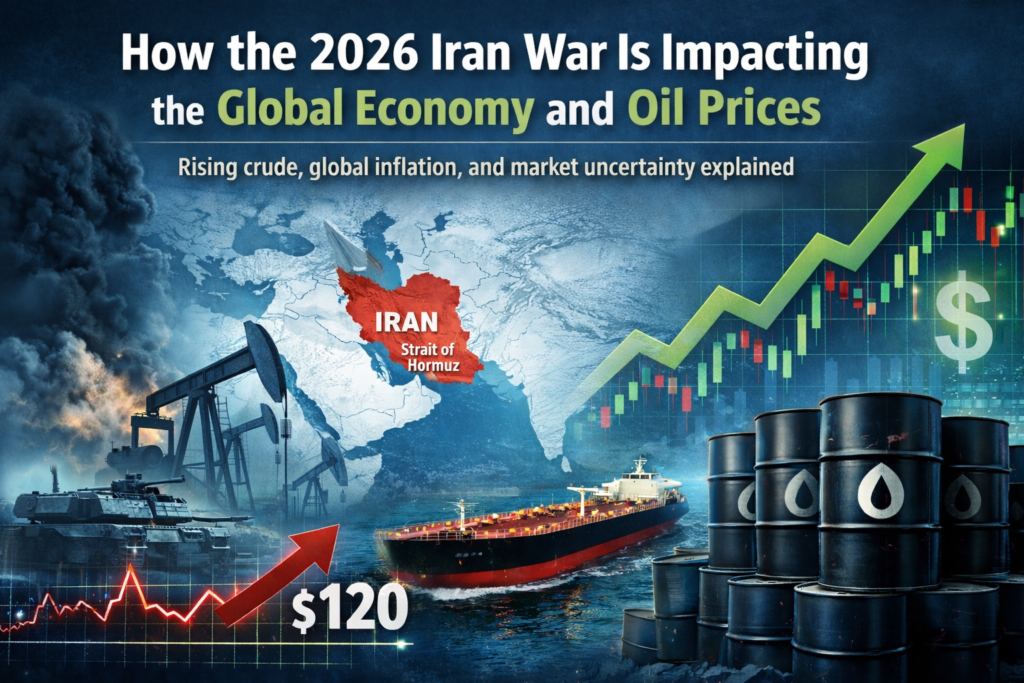
Right now, people across the world are beginning to feel the 2026 Iran war impact on global economy in very real and personal ways, from rising fuel prices to increasing costs of daily essentials. The distant geopolitical conflict creates financial pressure which affects households and businesses and governments throughout the world. The ongoing situation shows its effects in daily life because all economies remain connected to international conflicts.
Rising Oil Prices and Why It Matters
The first and most visible impact of the war is on oil prices. The Middle East is one of the largest oil-producing regions in the world. The global oil markets show immediate price changes whenever tensions increase in this region. The apprehension about possible supply interruptions leads to price increases.
The slightest information about the conflict causes instant price changes in the oil market, which creates extreme volatility. The ongoing uncertainty results in governments and businesses maintaining an anxious state of preparedness.
The Role of the Strait of Hormuz
The Strait of Hormuz serves as a primary factor that drives up oil prices. The narrow waterway functions as a crucial international oil transport corridor. The waterway enables daily transit of substantial quantities from the global oil supply.
Temporary threats or blockages to this route will result in immediate reductions of global oil supply. The market reacts to supply shortages by increasing prices, which creates economic effects that spread across the globe.
How It Affects Everyday Life
Higher oil prices don’t just impact fuel—they affect almost everything. Transportation costs experience an increase, which results in higher prices for products such as food and clothing and electronics.
The extra expenses that businesses incur will cause them to increase their prices, which leads to higher costs for consumers. Financial difficulties arise for people when worldwide conflicts occur, even when they live far from the conflict areas.
Impact on Global Economy
People reduce their spending when prices increase. Businesses postpone their investment plans because of economic uncertainty which leads to decreased economic expansion. The situation presents difficulties for governments because they need to manage inflation while they attempt to foster economic development.
Financial markets respond with strong reactions to economic events. The stock markets experience fluctuations because investors become more cautious and overall market confidence decreases.
🇮🇳 Countries Like India Feel It More
Countries that depend heavily on oil imports face greater challenges during economic difficulties. India depends on foreign sources to satisfy its oil needs. The country faces direct economic consequences when global oil prices increase.
The cost of fuel rises which leads to higher transportation expenses and results in increased prices for essential goods. The process creates a repeating pattern which causes inflation to increase indefinitely.
Market Fear and Uncertainty
Fearful customers create additional pricing pressure which exists alongside actual supply interruptions. Oil prices increase due to market uncertainty which exists with the possibility of conflict escalation. The market movements respond to uncertainty because they need to assess upcoming events instead of actual present conditions.
The combination of investor preference for safe investments with business safety measures leads to decreased economic activity.
Supply Chain Disruptions
The Middle East serves as a crucial supply point for both oil and natural gas and vital construction materials. The regional interruptions lead to worldwide supply chain disruptions which create material shortages and operational delays.
The situation affects every sector worldwide because it increases manufacturing costs while making agricultural products harder to obtain.
Ceasefire Talks: Hope or Uncertainty?
Ongoing ceasefire negotiations bring temporary peace to international markets because they create short-lived market improvements. The market experiences temporary price stabilization after positive news announcements.
The agreements that they create show high levels of instability. The ceasefire breaks because even minor disputes between the parties create renewed periods of conflict.
Also Read More About:
What Lies Ahead?
The future depends on how the situation unfolds. The global economy will experience gradual recovery after peace negotiations reach successful outcomes. The oil market will reach a stable state while market participants restore their lost trust.
The situation will deteriorate if existing tensions between the two parties keep escalating. The world economy will continue to experience financial instability together with rising costs and decreasing economic growth.
Final Thoughts
The current state of the world demonstrates its complete interconnectedness because International conflicts now impact global economic systems which in turn affect the everyday existence of millions.
The increasing threat of an Iran war global inflation emerged as a critical issue because energy price increases continue to drive worldwide cost hikes. The ongoing conflict will create stronger economic pressures because it will affect both individuals and nations.