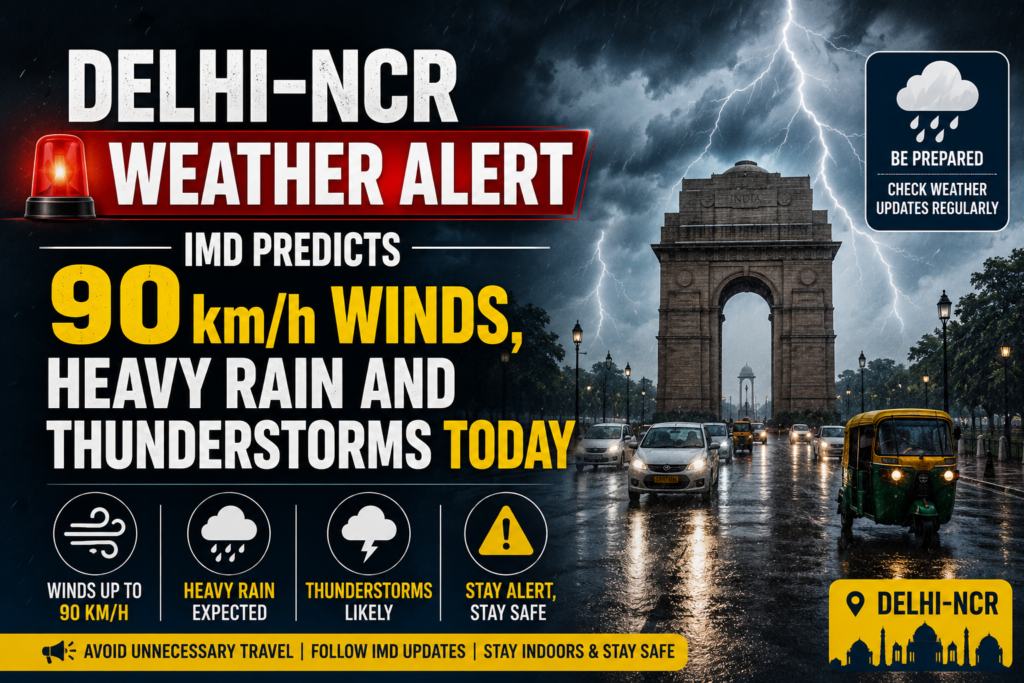
Residents across the National Capital Region are being urged to stay cautious as the India Meteorological Department (IMD) has issued a Delhi-NCR Weather Alert , warning of heavy rainfall, thunderstorms, and strong winds that could reach speeds of up to 90 km/h. While the sudden weather change is expected to provide relief from the intense summer heat, it may also cause disruptions to daily life, transportation, and essential services.
Over the past few weeks, Delhi-NCR has been experiencing scorching temperatures and uncomfortable humidity levels. Many residents have been eagerly waiting for some relief, and the approaching storm system could bring exactly that. However, weather experts are advising people not to underestimate the severity of the conditions expected over the next few hours.
What Is Causing the Sudden Change in Weather?
According to meteorologists, a western disturbance interacting with moisture-rich winds has created favorable conditions for severe thunderstorms across North India. As a result, Delhi, Noida, Gurugram, Ghaziabad, Faridabad, and nearby regions are likely to experience heavy showers, lightning, and powerful wind gusts.
Such weather systems are not uncommon during the pre-monsoon season, but the intensity of the forecast has raised concerns among authorities. Winds of up to 90 km/h can potentially uproot trees, damage weak structures, and create dangerous conditions on roads.
Areas Expected to Be Affected
The weather system is likely to impact most parts of Delhi-NCR, including:
- Delhi
- Noida
- Greater Noida
- Gurugram
- Faridabad
- Ghaziabad
- Sonipat
- Bahadurgarh
Residents in these areas should be prepared for sudden changes in weather, reduced visibility, and possible traffic disruptions due to heavy rainfall and strong winds.
Travel and Commuting May Be Affected
People planning to travel within the city or nearby areas may face delays. Heavy rain often leads to waterlogging in several parts of Delhi-NCR, causing traffic congestion during peak hours. Strong winds and dust storms can also reduce visibility, making driving more challenging.
Air travelers should keep an eye on flight updates, as severe weather conditions can sometimes affect airport operations. Commuters using public transportation are also advised to allow extra travel time and stay informed about service updates.
A Welcome Break from the Heat
Despite the challenges that severe weather can bring, many residents will welcome the drop in temperatures. Delhi-NCR has witnessed prolonged periods of extreme heat, with temperatures soaring above seasonal averages.
Rainfall and cloud cover are expected to bring noticeable relief, making outdoor conditions much more comfortable. Experts predict that temperatures could fall by several degrees following the storm, offering a short but welcome break from the relentless heatwave conditions.
Safety Should Remain a Priority
Authorities are encouraging residents to take precautions and avoid unnecessary risks during the storm. Here are some simple but important safety measures:
- Stay indoors during thunderstorms whenever possible.
- Avoid taking shelter under trees or near electric poles.
- Secure loose items on balconies, terraces, and rooftops.
- Keep away from flooded roads and waterlogged areas.
- Unplug sensitive electronic devices during lightning activity.
- Follow official weather updates and advisories.
- Keep emergency contact numbers accessible.
Those working outdoors, including construction workers and delivery personnel, should take extra care and seek shelter immediately if weather conditions worsen.
Why Extreme Weather Events Are Becoming More Common
Weather experts have observed an increase in extreme weather events across many Indian cities in recent years. Sudden storms, intense rainfall, heatwaves, and unusual temperature fluctuations are becoming more frequent.
Scientists believe that climate change, urban expansion, and changing atmospheric conditions are contributing to these patterns. As cities continue to grow, improving infrastructure and strengthening disaster preparedness measures will become increasingly important to reduce the impact of severe weather events.
What Happens Next?
The IMD expects the weather system to remain active for the next 24 to 48 hours. While the most intense activity may occur over a short period, isolated thunderstorms and light rainfall could continue in some areas even after the main storm passes.
Residents should stay informed through official weather forecasts and be prepared for changing conditions. Schools, businesses, and local authorities are also keeping a close watch on the situation to respond quickly if required.
Also Read More About: 2013 Kedarnath Disaster: 13 Years Later, What Has Changed in Uttarakhand?
Conclusion
The latest Delhi-NCR Weather Alert highlights the possibility of severe thunderstorms , heavy rainfall, and strong winds across the region. While the rain will provide much-needed relief from the summer heat, residents should remain cautious and follow safety guidelines to avoid unnecessary risks. Staying informed and prepared can help ensure that everyone navigates the changing weather conditions safely and comfortably.