
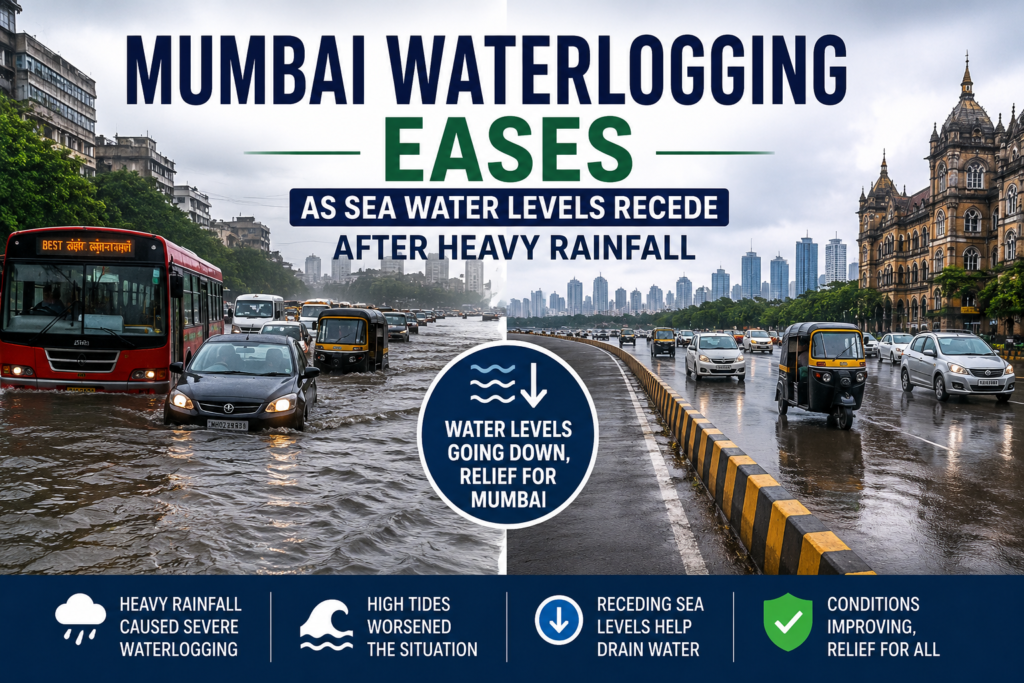
Big monsoon rains, kinda, put much of Mumbai on pause because roads, underpasses and homes were submerged in floodwater. Commuters faced major hassles , with long waits and delays, and in the same time transit services got hit across the city. Mumbai waterlogging turned into a real headache for residents, because the rising sea and rain water scrambled daily routines and also made life tough for civic workers. Later on, there was some respite , when sea water levels started to recede, so the stored rainwater could drain out in a smoother way, and flooding eased in a few areas.
Heavy Rainfall Leads to Flooding Across the City
Mumbai saw heavy rainfall in a short span, and that meant widespread flooding in many low-lying localities. Streets were covered with water, and travel became awkward for both motorists and pedestrians. Some neighborhoods reported water seeping into residential buildings, while small businesses and offices dealt with disruptions from the rough weather.
Places that usually face monsoon trouble again saw severe water build-up. Traffic snarls were reported on major corridors , as vehicles crawled through waterlogged stretches. Residents were asked to stay indoors, unless the trip is absolutely necessary, so they wouldn’t get stuck or exposed to more hazards.
High Tides Make It Worse
The flooding situation got a lot worse because of high tides along Mumbai’s coastline . When high tide was happening, the stormwater drainage systems had trouble pushing rainwater out into the Arabian Sea. So the water basically got held in place in quite a few areas, and that’s why roads plus other public spaces stayed submerged, sometimes for long periods, like it didn’t really let up.
Big bursts of rainwater kept coming in, but the drainage channels were already under pressure. With heavy rainfall together with higher sea levels, the city ended up seeing rough waterlogging in several neighborhoods. Officials really kept track of tide timings, since that detail was a big part of how fast floodwater could be drained, or not drained, depending.
Receding Sea Water Helps
Things started to improve once the sea water levels began to fall. As the tides receded, rainwater could leave the area through drainage systems more smoothly. In many spots, water levels gradually reduced, which gave residents and commuters some real breathing room.
Some roads that had been flooded for hours finally became passable again. Traffic also started moving better, and public transport services began running closer to normal. Municipal workers were sent out to clear debris and check the drainage infrastructure, just to reduce the chance of new blockages happening.
People welcomed the drop in sea water levels, because during the worst part of the flooding, daily life was seriously disrupted. In places where water had stayed on the ground during the highest tides, there was a clear improvement once the sea levels receded, and the change was obvious.
Impact on Transportation Services
Transportation networks across Mumbai got heavily affected during the flooding, like really badly. Local train services saw delays in certain sections because water was piling up near the railway tracks. Passenger movement became disrupted, not all of it but enough, since authorities kept prioritizing safety measures.
Bus services were impacted too, especially in places where roads stayed submerged. On major routes, long traffic queues were spotted again and again which then pushed up travel times for thousands of commuters. At the same time, airport operations were under close observation as the weather kept changing, even in short intervals.
Emergency response teams were kept on standby to handle any incident tied to flooding, fallen trees, or traffic disruptions triggered by heavy rainfall.
Businesses and Residents Face Challenges
The flooding didn’t stop at transportation. Businesses working in flood-prone zones ran into interruptions, because customers stayed indoors and water slipped into commercial spaces. Small retailers and local vendors reported temporary closures, mainly due to safety concerns and practical limitations.
Residents in low-lying neighborhoods struggled to reach essential services. Waterlogged streets made getting around difficult, plus some households mentioned minor property damage when floodwater entered their homes.
Community volunteers and local authorities worked in tandem, assisting affected residents while also checking conditions in the most vulnerable pockets.
Infrastructure Concerns Come Into Focus
Infrastructure concerns have come into focus again, after the recent flooding in Mumbai , the sort of thing people see and then forget until it happens once more. Even though drainage systems were upgraded in recent years, extreme rainfall keeps putting the city’s limits to the test , especially when huge volumes of water arrive at once.
In some areas, storm water drains were basically overwhelmed, and that meant water stayed around for a long time. Urban development, along with encroachment on natural drainage channels has also been flagged as part of the problem. A number of experts have said it’s critical to improve the drainage networks and to bolster flood management systems, not just in theory but in practice.
Still, questions keep coming up about how the city can get ready better, for extreme weather events that seem to be showing up more often than before.
Climate change and urban flooding
Climate experts point to changing weather patterns as a bigger issue for coastal places like Mumbai. Heavy rainfall events are being recorded more often, which raises the odds of flash floods, and also waterlogging that lingers.
Because the city sits on the coast it is more exposed, to the combined impact of intense rainfall and high tides. Experts are recommending long term solutions, involving sustainable urban planning, stronger drainage infrastructure, and overall climate resilience. More investment in flood mitigation projects is also being seen as necessary, so future risk can be reduced and residents aren’t repeatedly hit by monsoon related disruptions.
Outlook for the Coming Weeks
Weather officials have said to keep everyone, sort of, on watch as the monsoon season keeps going. More rainfall is expected in the next several weeks, and the situation can shift fast. The authorities are tracking weather updates and tide heights quite closely so they can respond effectively if problems start to appear.
Recently, the drop in sea water levels has given real, much needed relief from flooding, yet there’s still a risk of additional waterlogging. People are asked to keep an ear on official alerts and to prepare themselves especially during spells of very heavy rain.
Conclusion
With sea water levels now receding, flooding across Mumbai has eased after days of serious disruption from intense monsoon downpours. Better drainage has helped many impacted areas bounce back, giving some breathing room to locals, shops and daily commuters. Even with things improving right now, this episode is another reminder that the city still battles monsoon flooding, and that it really needs stronger infrastructure to manage upcoming weather pressures.