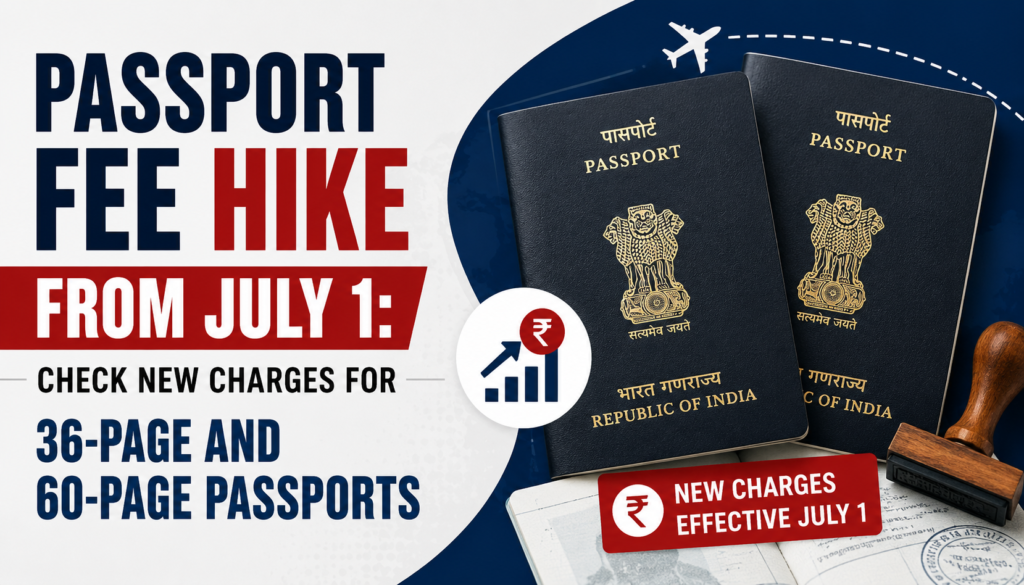
The Ministry of External Affairs (MEA) has announced a significant revision in passport charges across India. Amid ongoing discussions surrounding passport services, the government has officially increased the Passport Fee, with the new rates set to come into effect from July 1, 2026.
Whether you are applying for a new passport, renewing an existing one, replacing a lost passport, or opting for Tatkal services, you will now have to pay substantially higher fees than before. The revised fee structure covers almost all passport-related services, including Police Clearance Certificates (PCC), surrender certificates, and passports issued to minors.
Here is a detailed look at the updated passport charges and what they mean for applicants.
Passport Fee Increased Across Multiple Categories
The revised fee structure affects both standard and Tatkal passport applications. Individuals planning to apply for a passport after July 1 should be aware of the updated costs before beginning the application process.
For a standard passport with 36 pages, the application or renewal fee has increased significantly. Previously, applicants were required to pay ₹1,500 for a fresh passport or reissue. Under the revised structure, the fee has been raised to ₹2,500.
Similarly, the fee for a 60-page passport booklet has increased from ₹2,000 to ₹3,500.
The government has stated that these revised charges will apply to both fresh passport applications and passport renewals submitted on or after July 1, 2026.
New Passport Fee Structure Effective July 1, 2026
| Passport Service | Previous Fee | Revised Fee |
| Fresh/Reissue Passport (36 Pages) | ₹1,500 | ₹2,500 |
| Fresh/Reissue Passport (60 Pages) | ₹2,000 | ₹3,500 |
| Lost/Damaged Passport Replacement (36 Pages) | ₹3,000 | ₹5,000 |
| Lost/Damaged Passport Replacement (60 Pages) | ₹3,500 | ₹6,000 |
The increase represents a substantial rise in passport processing costs, particularly for applicants requiring replacement passports.
Also Read : Instagram Account Ban Suddenly? Don’t Panic — This Easy Method Can Help You Recover It in Minutes
Replacing a Lost or Damaged Passport Will Cost More
Individuals who lose their passport or require a replacement due to damage will also face higher charges.
Until now, the fee for replacing a lost or damaged 36-page passport was ₹3,000. From July 1 onward, applicants will need to pay ₹5,000 for the same service.
Likewise, the fee for replacing a lost or damaged 60-page passport has been increased from ₹3,500 to ₹6,000.
This means travelers are being advised to take extra care of their passports, as replacement costs have risen sharply under the new fee structure.
Tatkal Passport Services Become More Expensive
For applicants who need a passport urgently, the Tatkal service will also become significantly costlier.
The Tatkal scheme is designed to fast-track passport issuance, allowing applicants to receive their passports within a shorter period. However, this convenience will now come at a higher price.
For a 36-page passport under the Tatkal category, the total fee has been increased from ₹3,500 to ₹5,000.
Similarly, applicants seeking a 60-page passport through Tatkal services will now have to pay ₹6,000, compared to the earlier charge of ₹4,000.
It is important to note that the Tatkal fee includes the standard passport fee along with the Tatkal processing charges.
Revised Tatkal Passport Fees
| Tatkal Passport Type | Previous Fee | Revised Fee |
| 36-Page Passport | ₹3,500 | ₹5,000 |
| 60-Page Passport | ₹4,000 | ₹6,000 |
For individuals planning urgent international travel, these increased costs should be factored into travel budgets.
Higher Passport Fees for Minors
The revised Passport Fee structure also affects passports issued to children below the age of 18.
The fee for a 36-page passport issued to a minor has been increased from ₹1,000 to ₹1,750.
Additionally, if a child’s passport is lost or damaged and requires replacement, parents will now need to pay ₹4,250 instead of the earlier ₹2,000.
This change means families applying for passports for multiple children may experience a noticeable increase in overall application costs.
Updated Passport Fees for Children
| Service | Previous Fee | Revised Fee |
| Fresh Passport for Minors (36 Pages) | ₹1,000 | ₹1,750 |
| Replacement of Lost/Damaged Passport | ₹2,000 | ₹4,250 |
Police Clearance Certificate and Other Services Also Cost More
Apart from passport booklets, several related services have also become more expensive under the new fee structure.
The fee for obtaining a Police Clearance Certificate (PCC) has been revised upward. PCCs are often required for employment, immigration, education, and long-term visa applications abroad.
The charges for the following services have increased from ₹500 to ₹750:
- Police Clearance Certificate (PCC)
- Surrender Certificate
- Global Entry Program verification and related services
Applicants requiring these services after July 1, 2026, should be prepared for the revised charges.
Who Will Receive a Discount?
Despite the fee hike, the government has announced a concession for certain categories of applicants.
Children up to the age of eight years and senior citizens aged 60 years and above will continue to receive a 10% discount on the fee for fresh passport applications.
However, this benefit applies only to new passport applications. The discount will not be available for passport reissues, renewals, or replacement passports.
This move is intended to provide some financial relief to families with young children and elderly citizens applying for their first passport.
Passport Validity Remains Unchanged
While passport fees are increasing, the validity period of passports remains unchanged.
For adult passport holders, passports will continue to be valid for 10 years from the date of issuance.
For minors, passports will remain valid for five years or until the child reaches the age of 18 years, whichever occurs earlier.
Therefore, although applicants will be paying higher fees, the duration of passport validity remains the same as before.
Revised Fees for Indians Living Abroad
The Ministry of External Affairs has also revised passport service charges for Indian citizens residing overseas. Fees charged in foreign currencies, including US dollars and other local currencies, have been adjusted proportionately in line with the revised domestic fee structure.
Indian embassies and consulates around the world are expected to implement the updated rates from July 1, 2026.
Applicants living abroad are advised to check the latest fee schedule on the website of the respective Indian mission before submitting their passport applications.
What Applicants Should Do Before July 1
Individuals who are planning to apply for a new passport, renew an existing passport, or obtain related services may benefit from completing the process before the revised charges come into force.
Since the new fee structure becomes effective on July 1, 2026, applications submitted before that date will generally be processed under the existing rates, subject to official guidelines.
Given the substantial increase in several categories, early application could help eligible individuals save a significant amount of money.
Conclusion
The government’s decision to increase the Passport Fee marks one of the most significant revisions in recent years. From fresh passports and renewals to Tatkal services and replacement passports, applicants across nearly every category will face higher costs beginning July 1, 2026.
While the fee hike may increase the financial burden on travelers and families, the government has retained certain concessions for young children and senior citizens. Passport validity periods remain unchanged, ensuring that applicants continue to receive the same duration of service despite paying higher fees.
Anyone planning international travel, study abroad programs, employment opportunities overseas, or passport renewals should review the new fee structure carefully and plan their applications accordingly before the revised rates take effect.
Also Read : Kerala CM VD Satheesan: Future Kerala Chief Minister VD Satheesan Seeks Blessings from Cardinal Cleemis Bava