
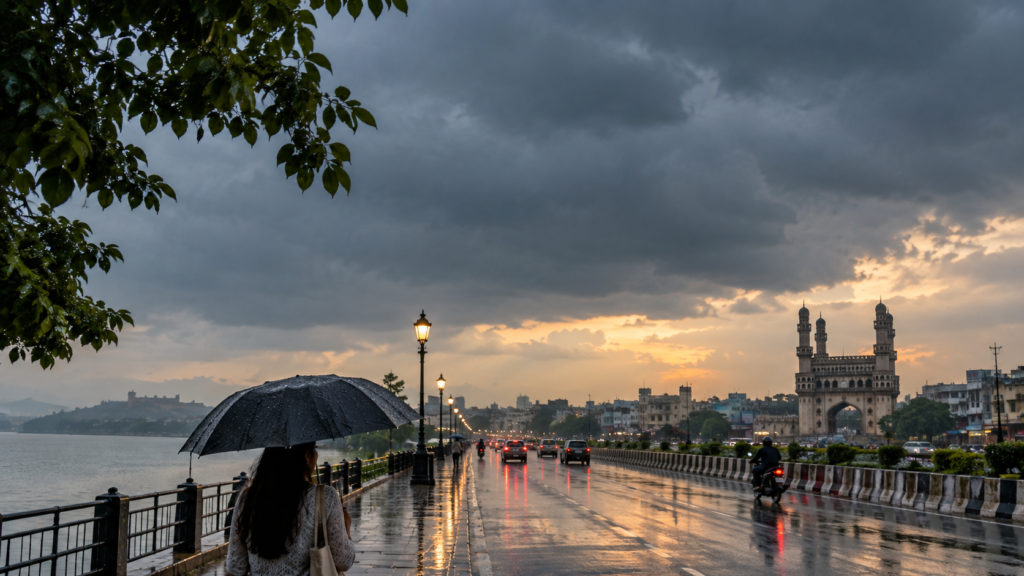
There is something strangely emotional about the end of the Indian monsoon 2026.
One day, the sky is dark before lunch, tea stalls are full, roads are shining after a sudden shower, and everyone is checking their phones before deciding whether an umbrella is worth carrying. Then, almost without announcement, the season begins to loosen its grip.
That transition is beginning now.
The India Meteorological Department (IMD) said conditions were becoming favorable for the Southwest Monsoon to withdraw from parts of West Rajasthan around September 19. But the word “withdrawal” can be misleading. It does not mean rain disappears from India overnight. Rain and thunderstorms can continue across several parts of the country even as the monsoon starts its gradual retreat.
And that may be the best way to look back at the Indian Monsoon 2026: not as one simple story of a good or bad rainy season, but as a season of sharp contrasts.
It Started Late, Then Changed Its Pace
The Southwest Monsoon 2026 arrived over Kerala on June 4, three days later than the normal onset date of June 1. Its progress was slow in the early part of the season, and the country did not receive full monsoon coverage until July 9. That was one day later than the normal date and marked the slowest nationwide advance since 2021.
June was particularly difficult.
India recorded a rainfall deficit of around 40% during the month, creating concerns for agriculture and water availability. Then July brought a dramatic change. Rainfall activity strengthened, the monsoon rapidly advanced across northern India and much of the accumulated deficit was reduced.
That early reversal is important because it shows why a single month’s rainfall rarely tells the complete monsoon story.
The weather does not move neatly from “bad” to “good.”
It shifts.
And this year, those shifts have been especially noticeable.
Know More : Nepal Floods: Morgues Run Out of Space, Authorities Turn to DNA, Dry Ice and Tags
Now the Season Is Ending With a Deficit
As September moves towards its final stretch, the bigger concern is the overall rainfall balance.
According to recent reporting based on IMD data, cumulative rainfall during the June–September season has remained around 15% below the long-term average. If that deficit persists through the end of the season, 2026 would be India’s driest monsoon in many years, with comparisons being drawn to 2009.
But the national figure needs context.
India is too large for one number to describe what everyone experienced.
Some regions received substantial rainfall while others remained in deficit. This uneven distribution matters almost as much as the national total because agriculture, reservoirs and groundwater conditions depend heavily on where and when the rain falls.
A farmer waiting for dependable showers experiences the monsoon differently from someone dealing with repeated flooding.
A city resident may remember the season through waterlogged roads and canceled plans.
Someone in a drought-prone area may remember it through dry fields and anxious conversations about the next crop.
The same clouds can tell very different stories.
September Is Not the End of Rain
The beginning of withdrawal also does not mean India is suddenly heading into a completely dry spell.
The IMD’s latest outlook continues to indicate rain and thunderstorms across different parts of the country even as the retreat begins in the northwest. The withdrawal process itself is gradual, with atmospheric circulation, moisture and rainfall patterns changing over time.
That is why a September forecast can feel contradictory.
One state may be preparing for clearer skies while another is watching a fresh weather system develop.
One city may finally get a break from water-logging while another sees another heavy shower.
The monsoon does not leave through one door.
It retreats piece by piece.
Behind the Rainfall Number Are Real Consequences
A 15% deficit can look like an ordinary statistic on a weather dashboard.
For agriculture, it is much more than that.
Rainfall influences soil moisture, irrigation requirements, sowing conditions and crop development. It also affects reservoirs and groundwater recharge, while prolonged or poorly distributed rainfall can create problems even when the national total does not look extreme.
Food markets can feel the effects too.
A weaker monsoon does not automatically mean food shortages, but prolonged rainfall stress can create pressure on agricultural production and prices. Recent reporting has already linked the 2026 rainfall deficit with concerns around crop output and food inflation.
That is why the monsoon matters even to people who never step into a field.
It eventually reaches the kitchen.
What the Monsoon Leaves Behind
Perhaps the most interesting part of a monsoon is what remains after the clouds move away.
There are fuller reservoirs.
Damp soil.
New vegetation.
Farm decisions that were made based on a few crucial weeks of rain.
There are also memories: the first shower after a hot afternoon, flooded streets, roadside chai, wet clothes that refused to dry and those evenings when the rain made everyone slow down for a while.
The monsoon, in that sense, is not just a weather event.
It becomes part of everyday life.
The Goodbye Will Take Time
The IMD’s expected withdrawal from parts of West Rajasthan around September 19 is the beginning of a transition, not a final goodbye.
Over the coming weeks, rainfall patterns will gradually change. The clouds will become less persistent in some regions. Dry spells will become more noticeable. The atmosphere will slowly begin preparing India for the next season.
But the 2026 monsoon has already left its mark.
It arrived late over Kerala, took its time reaching the rest of the country, recovered sharply in July and now approaches its retreat with rainfall still running below normal.
That makes its final chapter worth watching.
Conclusion
Every monsoon leaves behind more than rainfall figures.
This year’s story is about uncertainty, unevenness and change. It is about how quickly weather conditions can shift and how differently the same season can be experienced across a country as large as India.
The rain may be preparing to leave.
But its effects — on farms, cities, markets, water supplies and ordinary routines — will continue long after the last monsoon clouds disappear.
And perhaps that is the real story of Indian monsoon has one more time to tell.