
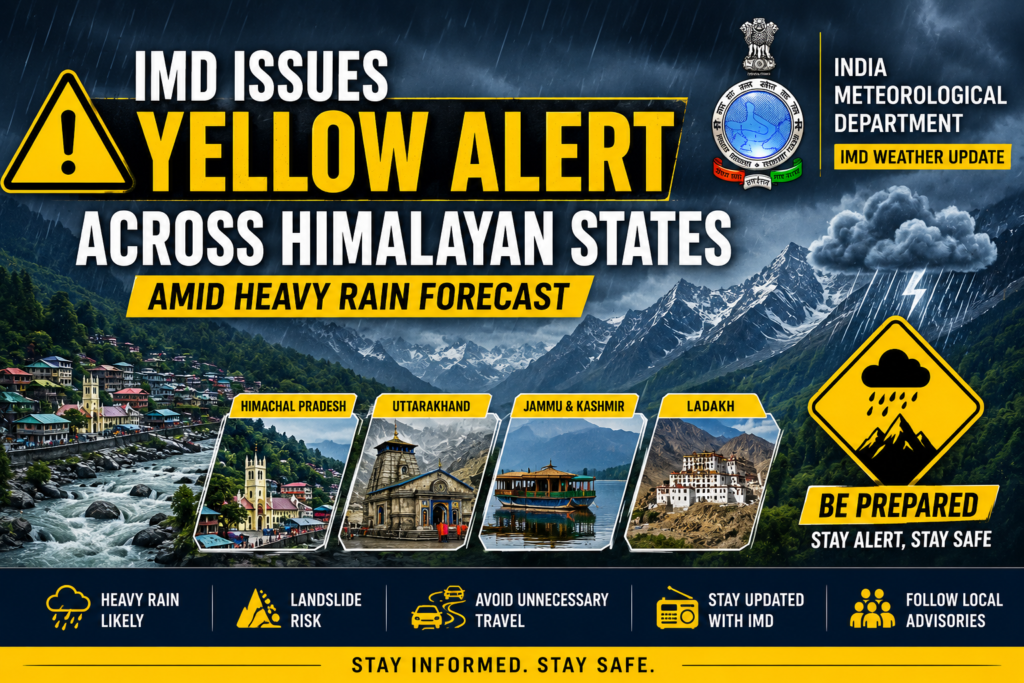
Weather conditions across northern India have started to shift really quickly, and the IMD Yellow Alert for Himalayan States has become a big deal for residents , travelers and also for local authorities. The India Meteorological Department, IMD, has now put out a yellow alert across several Himalayan belts because heavy rain could come along with thunderstorms, plus some localized landslides, over the next few days.
This warning is mostly expected to hit places like Himachal Pradesh, Uttarakhand, Jammu & Kashmir and also certain sections of the north eastern hill areas. With ongoing rainfall, fast cloud movement and a pretty unstable sky setup, day to day life in a number of hilly districts may get disrupted.
What Does the IMD Yellow Alert Really Mean?
An IMD yellow alert is usually shared to flag that weather could be disruptive, not necessarily a full disaster. Still, it works like an early heads up, so people should stay alert, and keep a little ready mindset, especially if they live in slope areas or near drains.
Per IMD, moderate to heavy rainfall may happen across parts of the Himalayan regions. Strong winds are also likely, and thunderstorms could occur in some isolated pockets. Tourists and travelers have been told to check the local weather updates before leaving for hill stations or any mountain routes, because conditions can change faster than expected.
Himalayan States likely to Be Affected
A few Himalayan states are being kept under close watch, since weather systems are moving in. Local authorities have begun tracking the more vulnerable locations where landslides and road blockages tend to happen during heavy rain periods.
Himachal Pradesh
Kayi districts in Himachal Pradesh are expected to go through continuous rainfall, so it is not just a quick shower kind of thing. Popular spots like Manali, Shimla, Dharamshala and Kullu could see some weather disruption over the next few days , you know how it usually happens. Local offices have already asked travelers not to take chances on risky mountain roads when the rain turns heavier. River water levels are being watched very closely as well.
Uttarakhand
Uttarakhand is still pretty sensitive whenever monsoon-related weather starts acting up. During heavy rain stretches, the state often sees landslides, road collapses, and traffic disruptions, sometimes all together. Pilgrimage routes, especially those leading toward Kedarnath, Badrinath and other Char Dham places, may get small travel interruptions if the rainfall continues to build. Better plan with extra time, because things can shift suddenly.
Jammu & Kashmir
Rain activity has also picked up in Jammu & Kashmir. In some districts, cooler temperatures have been felt after the recent showers. Mountain regions are under observation, because sudden shifts in weather can create travel related trouble. Tourists heading to Kashmir valleys and higher altitude areas have been told to stay careful, particularly during outdoor activities when the conditions can change fast.
Possibility of Landslides and Flooding
During heavy rainfall across the Himalayan belt, one major worry is landslides. When the rain keeps coming, slopes can weaken, and that is when falling rocks, mudslides, and blocked highways become more likely. In low-lying areas near rivers and streams, flood like conditions may also appear. Authorities are keeping emergency response teams on standby in zones that look vulnerable.
Also, a few roads that connect remote villages might shut temporarily if the rain lasts longer. People living close to landslide-prone pockets have been asked to stay alert, because the ground there can react quickly.
Impact on Tourism and Travel
Tourism is among the biggest industries in the Himalayan states, especially in summer and monsoon time . Still, weather that refuses to stay stable can mess up travel plans in a big way.
People planning trips to :
- Shimla
- Manali
- Mussoorie
- Nainital
- Srinagar
- Dharamshala
really should keep checking weather updates, like right before they leave, not just once. Because, even train delays can happen and flight schedules might flip around, plus road traffic can get disrupted in the places where conditions turn bad.
Travel specialists often suggest a few practical steps, such as:
- Skip night travel in hilly stretches
- Take emergency essentials, just in case
- Recheck route conditions at frequent intervals
- Pay attention to advisories from local administration
Why Weather Conditions Are Changing
Meteorologists say the present weather activity seems connected to strong western disturbances, along with monsoon moisture that moves into northern India. Together these systems can bring heavy or intense rainfall across mountainous areas.
Climate experts also mention that long term climate patterns are shifting, which might be raising the odds of severe weather episodes in fragile Himalayan ecosystems.
In recent years, several Himalayan states have been dealing with things like :
- unexpected cloudbursts
- flash floods
- heavy rainfall bouts
- sudden swings in temperature
These events have made people worry more about infrastructure safety, and also whether disaster preparedness in mountain regions is strong enough or not.
IMD Advisory for Residents
The India Meteorological Department has said residents should stay careful through the alert window. People in vulnerable pockets are asked to skip unneeded moving around during the peak hours of heavy rainfall, just to be safe.
During this period, the following cautions are recommended, more or less like:
- Stay indoors when thunderstorms are around
- Try not to stay near riverbanks or steep hill slopes
- Keep your emergency phone list ready, always
- Check the official weather notices regularly, and not only once
- Don’t drive in low visibility
Local disaster management teams are also working alongside district administrations, so if anything turns urgent they can respond fast, if required.
Farmers and Local Communities on Alert
Weather alerts are not only for tourism. In Himalayan states these warnings directly touch farming and local incomes too. Farmers may get crop loss because of extra rain, soil erosion and waterlogging, and sometimes it happens pretty suddenly.
In apple belt areas across Himachal Pradesh and Uttarakhand, growers are watching rainfall signals closely. Sudden shifts in weather can change harvest quality, so timing matters a lot.
Rural communities in far off mountain regions may also see short lived connectivity troubles, especially when roads get blocked or communication gets disrupted.
Also Read More About: Western Companies Returning to Russia Despite Sanctions: Why Global Businesses Are Reentering the Russian Market in 2026 ?
Final Thoughts
The most recent warning from the IMD points out how important it is to be prepared as climate conditions keep shifting in mountainous areas. Even if a yellow alert isn’t a sign of extreme disaster, it’s still a clear caution for residents and people traveling.
With rainfall continuing over parts of northern India , authorities are staying focused on tracking at risk districts and keeping people secure. If you’re planning a visit to Himalayan destinations, keep up with updates, avoid risky travel paths, and stick to official advisories, please.