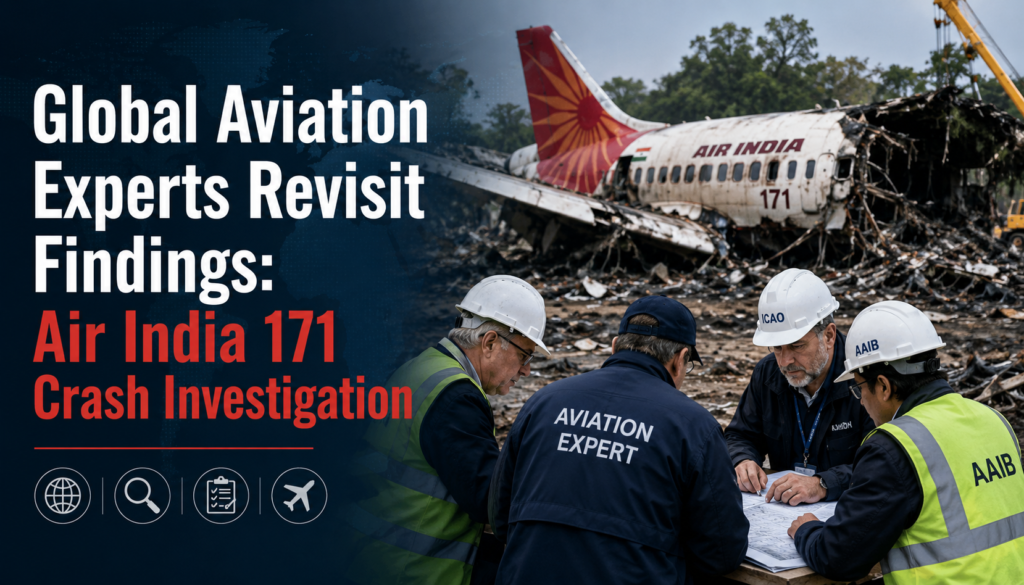
The latest Air India 171 crash investigation still ends up pulling international attention, even a year on after one of the most devastating aviation disasters in recent history. You have families, aviation experts, regulators, and industry leaders still looking for definitive answers. Lately, the whole thing keeps drifting back into public discussion because of new developments, delayed reports, and a bunch of emerging technical questions, sort of like it never really went away.
A year has gone by since the tragic crash of Air India Flight 171 shortly after takeoff from Ahmedabad. The disaster took hundreds of lives, and it also became the first fatal accident tied to a Boeing 787 Dreamliner. Early findings did turn up critical information, but still, a lot of details feel unresolved or unfinished. Aviation analysts think the final conclusions could affect future airline safety protocols worldwide, not just locally.
Why the Air India 171 Crash Investigation still matters
You know, aviation folks study the big accidents so they can tweak safety rules and stop the next tragedy, even if it feels obvious sometimes. The updated Air India 171 crash investigation is especially important because it involves a newer aircraft with those advanced safety systems that are supposed to help, ya know, in theory.
Some of the main reasons people still care about the investigation are kind of simple but also not really:
– Questions about what the cockpit actions looked like, right before impact
– Checks on the engine fuel control systems, and how they behaved
– A look at the maintenance procedures, like whether everything was handled properly
– An assessment of emergency response protocols, and how fast things kicked in
– Effects on airline operations worldwide, not just one company or one route
Industry observers keep watching closely, mostly because the final report could end up shaping future aviation regulations, which is a big deal.
What the preliminary findings revealed
The early investigative reports suggested that the two engine fuel control switches were moved from the RUN position to the CUTOFF position shortly after takeoff. That switch action apparently cut off fuel flow to both engines, and the result was a quick drop in thrust. They tried to get engine operation back, but at that point, the aircraft had already lost too much critical altitude and all.
A few findings got attention almost immediately:
– No major weather issues were reported
– Takeoff performance appeared normal, at least based on what they saw
– Fuel quality concerns were not identified
– Emergency systems activated as designed
– Investigators found no immediate signs of catastrophic structural failure
So basically, these observations narrowed where the detailed Air India 171 crash investigation could go next, more toward cockpit decisions and the way systems interacted with each other, rather than some sudden outside break.
Also Read: Top 10 AI Tools Everyone Should Use in 2026
New Questions Emerging, One Year Later
The fact that the final report only came out a year later has now sparked new arguments. Families of victims and aviation experts have both been raising doubts about things that still feel unanswered, not settled.
A few parts are still under examination, even if people want the whole picture already:
Engine analysis still feels unfinished
What the reports are saying is basically that the more detailed engine examinations were never really fully completed. Some components were sent for specialized analysis, and investigators are still sorting through the technical data. That situation on its own seems to be a main reason for the late final report.
Human factors assessment
Human performance remains a major thread here. Cockpit recordings reportedly contain a talk between the pilots around the fuel cutoff event. Figuring out precisely how those switches moved and why they moved remains essential. It’s not just a minor detail either.
System design evaluation
Experts are continuing to check whether parts of the system design might have had a role. Investigators are also reviewing older safety advisories that relate to fuel switch mechanisms and the cockpit controls themselves. Some people say the “interface” matters more than it sounds.
Transparency concerns
Families of victims have repeatedly asked for clearer transparency about the investigation findings. Honestly, public trust depends a lot on communication that is direct and not delayed or overly vague by authorities.
Impact on global aviation safety
This official Air India 171 crash investigation hasn’t stayed within India only. Safety reviews elsewhere have been influenced, and airlines, manufacturers, and regulators around the world have watched closely as details kept coming out.
The areas getting extra scrutiny include:
- Fuel control system reliability
- Flight crew procedures
- Cockpit resource management
- Aircraft maintenance inspections
- Emergency recovery protocols
Safety experts believe that what gets learned here could help strengthen operational standards in multiple regions, not only where it happened.
Also Read: Passive Income Ideas That Work While You Sleep
International Cooperation: Its Role
Big aviation investigations, you know, they almost always end up involving several countries and different organizations. In the complete Air India 171 crash investigation, there was participation from international aviation authorities, plus aircraft manufacturers and engine specialists as well. And yeah, it’s not just paperwork; it’s a kind of shared responsibility but also a way to check details from more than one angle.
That joint method tends to help with a few things, like the following:
- An independent technical review
- Getting specialized know-how
- Keeping investigative standards in line
- Doing a more complete analysis of the evidence
So in other words, this cooperation is usually seen as essential when people are trying to evaluate really complex aviation accidents.
Families keep going, still searching
One year after the tragedy, many families are still frustrated because there is no final report. The emotional aftereffect of the disaster keeps being felt by survivors and relatives of the victims.
Some key concerns families have raised include:
- Publication delays for the findings
- Not enough clarity about the causes
- Questions about accountability
- Long-term support measures
And calls for transparency have become, frankly, a big part of the public conversation around the Air India 171 crash investigation findings.
What Could Happen Next, though?
Investigators are expected to roll out more findings after they finish engine examinations and review all the evidence they can get. Aviation experts believe the next reports will probably tackle the rest of the technical stuff and the operational questions that are still hanging around.
Possible outcomes might be something like the following:
– Updated safety recommendations, and maybe tweaks to what everyone thought was “good enough.”
– Procedural changes for airlines, in a kind of ripple effect
– More in-depth cockpit system reviews, with extra scrutiny
– Extra training requirements for crews, not just a quick refresh
– Regulatory improvements, which could reach beyond a single carrier
In the end, the final conclusions could end up being a significant reference point for aviation safety around the world.
Also Read: What Is DeFi and Should You Care?
FAQs
1. What exactly is the Air India 171 crash investigation?
Answer: This Air India 171 Crash Investigation is basically the official inquiry into the June 2025 crash of Air India Flight 171, not long after it left the ground from Ahmedabad
2. Why has the final report been delayed?
Answer: It’s being said that investigators are doing extra engine analysis; also, they are re-checking technical evidence before they publish the final conclusions, so yeah, it takes more time
3. What did the preliminary report show, in brief?
Answer: The initial report suggested the fuel control switches ended up in the CUTOFF position shortly after takeoff, which then led to engine power loss
4. Are investigators still looking at possible mechanical problems?
Answer: Yes. They are still doing technical examinations, especially on engine systems and the linked components, basically the related parts
5. Why does the Air India 171 crash investigation matter for aviation?
Answer: The results could impact future safety regulations, changes in pilot training standards, aircraft system reviews, and airline operating procedures across the world, even beyond this single case