
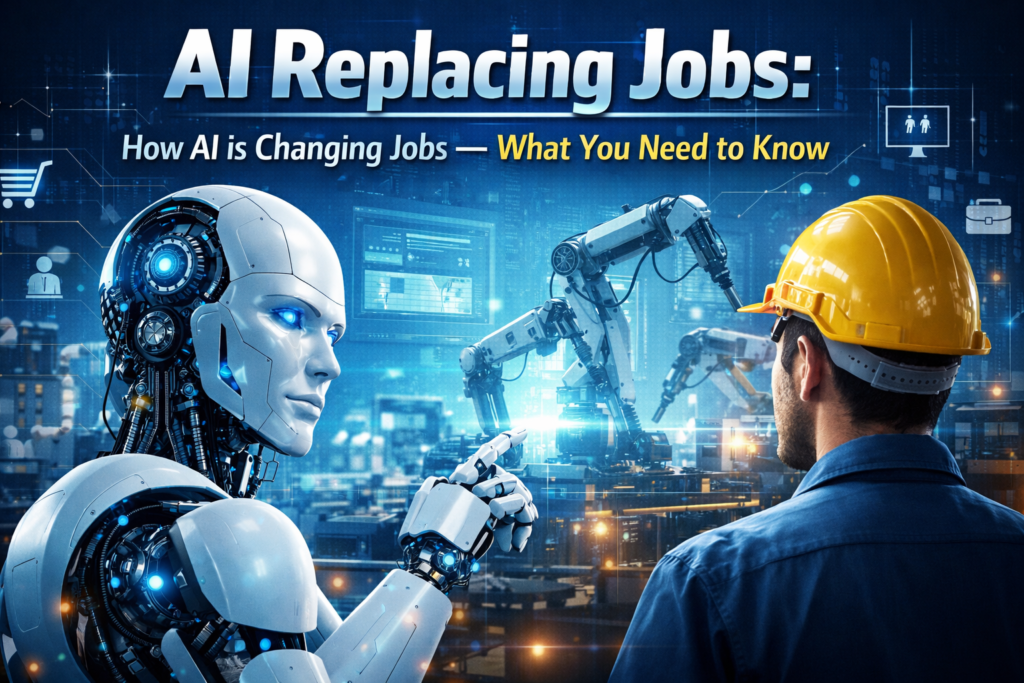
Artificial Intelligence (AI) is no longer a futuristic concept—it is already transforming industries, businesses, and the way people work. From automation in manufacturing to smart algorithms in marketing, AI is reshaping the global workforce at an unprecedented pace. One of the most talked-about concerns today is AI replacing jobs, and whether this technological shift will create more opportunities or lead to widespread unemployment.
In this article, we will explore how AI is changing jobs, which sectors are most affected, the opportunities it brings, and what you need to do to stay relevant in this evolving landscape.
Understanding AI Replacing Jobs
The phrase AI replacing jobs refers to the automation of tasks traditionally performed by humans using artificial intelligence technologies. AI systems can analyze data, recognize patterns, make decisions, and even perform creative tasks, often faster and more accurately than humans.
However, it’s important to understand that AI is not just about replacing jobs—it is also about transforming them. While some roles may disappear, many new roles are being created, and existing jobs are evolving.
Industries Most Affected by AI
1. Manufacturing and Automation
Manufacturing was one of the first sectors to experience automation. AI-powered robots can assemble products, inspect quality, and manage supply chains with minimal human intervention. As a result, repetitive manual jobs are declining.
2. Customer Service
AI chatbots and virtual assistants are increasingly handling customer queries. Businesses use AI tools to provide 24/7 support, reducing the need for large customer service teams.
3. Data Entry and Administrative Jobs
AI can process and organize data much faster than humans. Tasks like data entry, scheduling, and documentation are now being automated, impacting clerical roles.
4. Transportation and Logistics
Self-driving technology and AI-driven logistics systems are gradually transforming transportation. While full automation is still developing, the potential impact on drivers and delivery workers is significant.
5. Content Creation and Marketing
AI tools are now capable of generating written content, designing graphics, and analyzing marketing trends. This has changed the way marketers and content creators work, although human creativity still plays a crucial role.
Jobs That Are Less Likely to Be Replaced
The occupations which involve human interaction and emotional intelligence and complex decision-making processes face less risk from automation. The following professions depend on human interaction and emotional intelligence and complex decision-making abilities.
The healthcare sector requires doctors and nurses and therapists to deliver patient care. Creative professionals (writers, artists, designers) Educators and trainers Skilled trades (electricians, plumbers) Leadership and strategic roles.
AI can assist in these fields, but it cannot fully replace the human touch required.
How AI is Creating New Opportunities
The present job market exists because artificial intelligence technologies create new employment opportunities while they eliminate existing positions. The need for professionals who possess expertise in artificial intelligence fields is growing at a rapid pace.
People now work in new occupations which did not exist in previous decades because these positions have become the most sought-after jobs throughout the world.
Also Read : How to Use AI Tools For Content Writing: A Complete Guide
The Shift from Jobs to Skills
One of the biggest changes driven by AI is the shift from job-based thinking to skill-based thinking. Instead of focusing on a specific job title, individuals need to develop adaptable skills that remain relevant across industries.
Key Skills to Focus On:
- Critical thinking and problem-solving
- Digital literacy and technical skills
- Creativity and innovation
- Emotional intelligence
- Adaptability and continuous learning
In a world where AI replacing jobs is becoming more common, skills are the new currency.
The Role of Upskilling and Reskilling
Professionals need to update their skills throughout their careers because it is necessary for them to maintain their professional competitiveness. In the AI-driven economy, upskilling and reskilling work as fundamental requirements for workforce development.
Ways to Stay Ahead:
- Take online courses in AI, data analysis, or digital tools
- Learn programming languages like Python
- Stay updated with industry trends
- Gain hands-on experience with AI tools
- Focus on lifelong learning
Companies run training programs to support their employees who need to adapt to new technological advancements.
Challenges and Concerns
While AI offers many benefits, it also raises several concerns:
1. Job Displacement
The biggest concern is job loss due to automation. Workers in repetitive roles are most at risk.
2. Skill Gap
There is a growing gap between the skills workers have and the skills required in an AI-driven economy.
3. Ethical Issues
AI raises questions about privacy, bias, and decision-making. Ensuring ethical use of AI is crucial.
4. Economic Inequality
If not managed properly, AI could widen the gap between skilled and unskilled workers.
Also Read : Data Privacy: What Tech Companies Know About You
What Governments and Companies Are Doing
Governments and organizations need to find solutions for employment problems created by AI job automation. The following activities support this goal:
Companies dedicated to workforce development need to create programs which help employees gain new skills through educational opportunities. Digital literacy should be improved through educational programs which teach basic digital skills. The system should establish guidelines which govern the responsible implementation of artificial intelligence technology. Companies exist to develop new products while creating their own businesses through their innovation efforts.
Companies need to transform their employees instead of treating them as expendable assets.
Conclusion
Artificial intelligence continues to grow and this development creates major changes for employment sectors. The concern about AI employment replacement needs to be viewed within its broader context. AI is not just eliminating jobs—it is transforming industries because it creates new positions and changes traditional work methods.
The future belongs to those who are willing to adapt, learn, and evolve. People who develop their abilities while adopting new technology and keeping current with information will succeed in artificial intelligence era.
Instead of fearing AI, people should learn how to use it for their personal development and organizational growth.

Pingback: HYROX Faces Backlash After Athlete Suffers Bowel Incontinence Mid-Race - blogs.digitalgrowth.media