
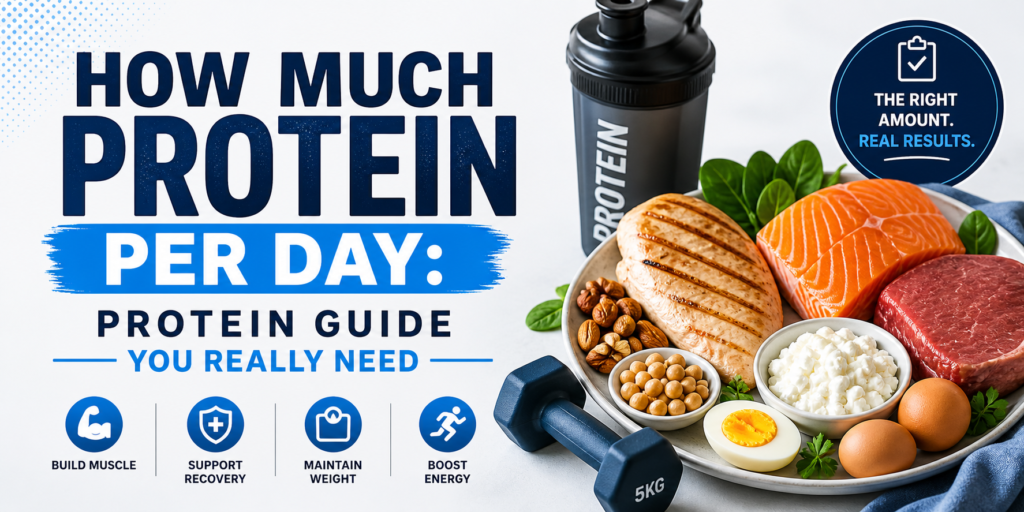
Maintaining a balanced diet is essential for overall health, and understanding how much protein per day your body requires plays a key role in achieving that balance. Protein is crucial for building muscles, improving energy levels, and supporting vital body functions. Whether your goal is weight loss, muscle gain, or simply staying healthy, knowing your daily protein intake can make a significant difference. This guide will help you clearly understand your protein needs and how to meet them effectively.
What Is Protein and Why Is It Important?
Protein serves as a macronutrient which consists of amino acids that scientists identify as the essential components for creating life. Amino acids function as vital components which enable the body to repair tissues and develop muscles while creating enzymes and hormones and maintaining immune system health. Protein exists in every single body cell which establishes its essential function for preserving human health.
Your body needs protein to function properly, because insufficient protein intake leads to:
- Muscle weakness or loss
- Low energy levels
- Poor recovery after exercise
- Weakened immunity
People need to understand that daily protein consumption requires they need to practice it as their essential need.
How Much Protein Per Day Do You Need?
People need different protein requirements which depend on their body weight combined with their exercise habits and age and their fitness objectives.
General Guidelines:
- Sedentary adults: 0.8 grams per kilogram of body weight
- Lightly active individuals: 1.0 – 1.2 grams per kilogram
- Active individuals: 1.2 – 2.0 grams per kilogram
- Athletes or muscle gain: 1.6 – 2.2 grams per kilogram
Example:
If you weigh 70 kg:
Minimum intake: 56g per day
Active lifestyle: 84–140g per day
The numbers present a flexible measurement which lets you change your intake according to your objectives.
Protein Needs Based on Your Goal
1. Weight Loss
The weight loss process depends on protein because it enables people to stay satisfied for extended time periods which results in decreased caloric consumption. The process helps you lose fat while preserving your muscle tissue.
Recommended protein intake for adults ranges between 1.2 and 1.6 grams per kilogram of body weight.
2. Muscle Building
The body requires protein to repair muscles and build new muscle tissue during muscle building activities. The combination of strength training and increased protein consumption delivers optimal training outcomes.
Recommended protein intake for adults ranges between 1.6 and 2.2 grams per kilogram of body weight.
3. General Health
The recommended protein intake for people who want to stay healthy without specific fitness objectives should range between 0.8 and 1.0 grams per kilogram of body weight.
4. Older Adults
The process of aging leads to increased muscle loss among older adults. Older adults can maintain their physical abilities and muscle strength by consuming more protein.
Recommended protein intake for adults ranges between 1.0 and 1.2 grams per kilogram of body weight.
Best Sources of Protein
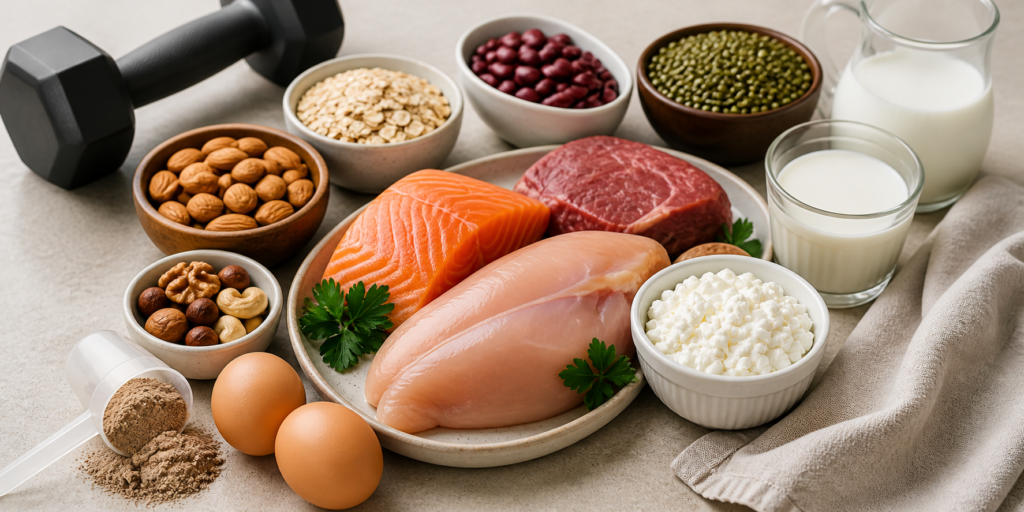
You need to eat different protein sources because they provide essential amino acids which your body needs to function properly.
Animal-Based Protein:
- Eggs
- Chicken
- Fish
- Lean meat
- Dairy products (milk, yogurt, cheese)
- Plant-Based Protein:
- Lentils and legumes
- Chickpeas
- Tofu and soy products
- Nuts and seeds
- Whole grains
Complete protein can be obtained through the combination of different plant-based foods which provides the same benefits as animal protein.
When and How to Consume Protein
It is more beneficial to distribute your daily protein intake across several meals instead of consuming all your protein during one meal.
Ideal Distribution:
- Breakfast should contain 20 to 30 grams of protein.
- Lunch should contain 20 to 40 grams of protein.
- Dinner should contain 20 to 40 grams of protein.
- Snacks should contain 10 to 20 grams of protein.
The process helps your body to absorb nutrients better while promoting muscle development.
Signs You Are Not Getting Enough Protein
Your body begins to demonstrate various symptoms when you do not consume enough protein which include:
- Continuous tiredness
- Thinning hair
- Reduced muscle strength
- Increased occurrence of illnesses
- Extended period needed for recovery after exercise
People can adjust their dietary habits by identifying these symptoms at an early stage.
Can You Eat Too Much Protein?
The body needs protein for functioning yet excessive protein intake creates health issues. The body suffers from three main health issues when people consume excessive protein which they continue to do for multiple months.
Most people do not need more than 2.2 g/kg per day protein intake unless a medical professional provides them with guidance.
Common Protein Myths
Myth 1: More protein always means more muscle
Truth: Muscle growth also depends on exercise and overall calorie intake.
Myth 2: Only athletes need high protein
Truth: People need protein yet their required amounts differ.
Myth 3: Plant protein is not effective
Truth: Plant-based protein becomes equally effective when it receives proper combination treatment.
Also Read More About: Passive Income Ideas That Work While You Sleep
Final Thoughts
Knowing your daily protein requirements assists you in achieving your health and fitness objectives. Your ideal protein intake should reflect your personal goals and current activity level and daily life patterns. Your health will improve greatly when you select high-quality protein sources and distribute your protein intake throughout the day while following a balanced diet.
Protein serves two purposes because it builds muscle mass and provides essential support to all body functions. To achieve optimal health and performance, develop healthy eating habits that you maintain while making dietary adjustments to match your changing requirements.