
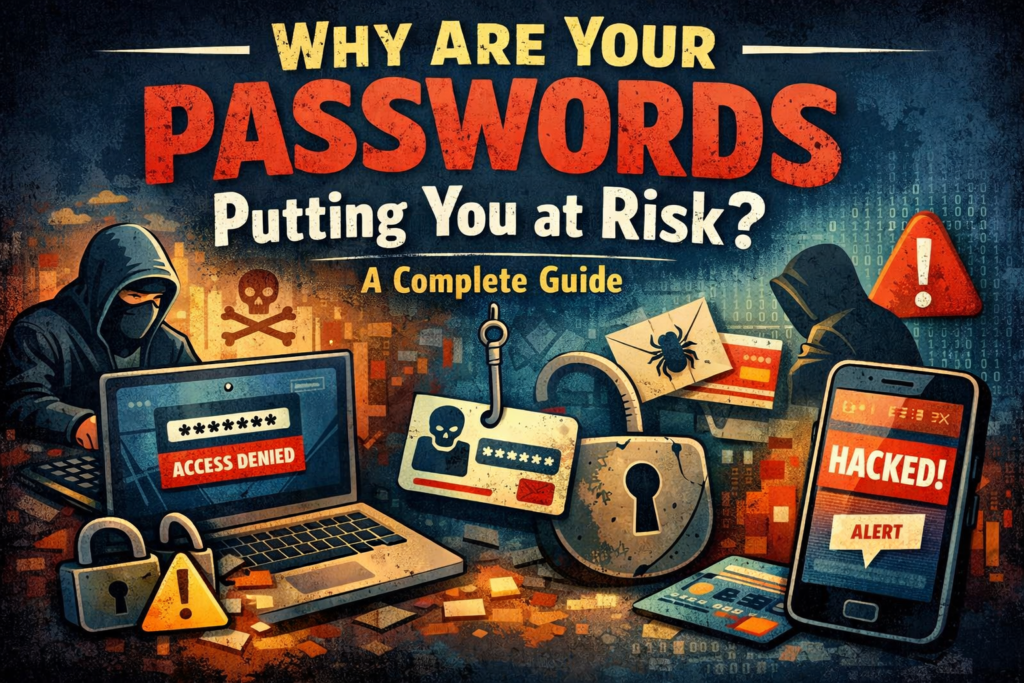
Your digital identity protection depends entirely on the strength of your passwords in today’s interconnected world. Passwords serve as the primary defense mechanism which protects users from cyber attacks across their social media accounts and banking applications. People continue to use weak passwords because they lack understanding about password security despite growing awareness of this issue. Strong password practices require users to understand their importance while they implement effective password security tips which help users remain safe from cybercriminal attacks.
The Hidden Dangers of Weak Passwords
Hackers find weak passwords to be their most convenient method for accessing secure systems. Automated tools make it possible to defeat common password selections which include “123456” and “password” and personal information such as your name and birthdate within seconds. Cybercriminals implement two main methods for attacking systems which are brute force attacks that test multiple combinations and credential stuffing which involves using stolen login details across different platforms.
One compromised account leads to multiple subsequent account breaches because attackers use the first account to access additional accounts. If your email password gets hacked attackers use that access to reset your other account passwords which allows them to view your confidential information including financial records and personal photos and private messages. Password security tips must be followed because they serve as essential requirements for protecting your accounts.
Why People Still Use Weak Passwords
People still use weak passwords because they refuse to follow multiple security alerts. Users choose weak passwords because it offers them better usability. People have difficulty remembering secure passwords which causes them to use identical passwords on different online services. The people who protect their data assume hackers will not try to attack them.
People do not understand the critical problem of cyber security. Users do not know about the advanced capabilities that hackers use to execute cyberattacks. Hackers no longer rely on guesswork; they use advanced tools and databases of leaked passwords to break into accounts efficiently.
The Cost of Poor Password Practices
The consequences that arise from inadequate password protection lead to grave outcomes. People who suffer from this problem will experience identity theft and financial losses and damage to their reputation. The data breach incident will lead to companies facing legal consequences while losing their customer confidence and enduring substantial financial losses.
The past few years have seen major data breaches that have exposed more than two million user credentials to the public. Cybercriminals worldwide can access these passwords because they become available on the dark web after hackers leak them. People need to follow password security tips because those measures protect their personal and professional safety.
Essential Password Security Tips
You must use established methods to improve password security and protect your online presence. The following password security tips provides practical solutions that effectively protect your passwords.
1. Use Strong and Unique Passwords
Password creation requires users to select between 12 and 16 characters which must contain uppercase letters lowercase letters numbers and special characters. People should not use their personal information which includes their full name and birth date as password elements.
2. Avoid Reusing Passwords
Every account needs its own distinct password. When people reuse passwords their likelihood of losing multiple accounts increases because hackers need only access one account to find their passwords.
3. Enable Two-Factor Authentication (2FA)
The implementation of additional security measures protects systems better from unauthorized access than single security methods do. A second authentication step will stop anyone from entering your account even if they possess your password.
4. Use a Password Manager
Password managers create and save complex passwords in a secure manner. Users can stop worrying about password retrieval while their system will comply with password security tips.
5. Update Passwords Regularly
You should change your passwords at regular intervals especially for your most sensitive accounts which include email and banking. The practice of regular password updates improves security by reducing risks that stem from possible data breaches.
6. Be Cautious of Phishing Attacks
Do not open links that seem doubtful because they might lead to deceptive websites where you should not enter your login details. You should always check your email and website links to confirm their legitimacy before entering your login information.
7. Monitor Your Accounts
You should check your account activity regularly to find any strange activities. If you detect an account compromise early you can stop additional harm from occurring.
The Role of Technology in Password Security
Technology develops solutions for handling dangers which arise from password usage. Many platforms now provide biometric authentication, which includes fingerprint recognition and facial recognition, as a replacement for standard password systems. Passwords continue to exist as a basic method for online security even though these methods provide better protection.
Organizations now use stricter security protocols which include mandatory complex password systems and advanced login attempt monitoring. Users need to maintain their own safe password practices by followingpassword security tips recommendations throughout their online activities.
Common Mistakes to Avoid
Users create security problems through their unintentional actions regardless of their good intentions. Your information becomes vulnerable when you write passwords on paper and share them with others and store them in unsecured files. Users who neglect security updates and platform warnings create security risks for their accounts.
Another common mistake is using predictable patterns, such as “Password@123” or slight variations of the same password. Hackers are well aware of these patterns and can exploit them easily.
Building a Secure Digital Habit
Password security demands continuous improvement since it requires both active implementation and security training. The simplest way to decrease your risk is through making minor changes which you should maintain throughout time. Start by reviewing your existing passwords and replacing weak ones with stronger alternatives.
Password security education should extend to both yourself and the people around you. The digital safety of your family and friends and colleagues will improve through your efforts to educate them about online security risks.
Also Read : How to Use AI Tools For Content Writing: A Complete Guide
Conclusion
Your passwords serve as the keys that protect your online activities, so using weak passwords creates major security issues. Organizations need to adopt secure protection methods because their cyber protection needs require them to secure all their systems against current security threats.
You can safeguard your personal information and work data against cybercriminals by using effective password security tips techniques which include creating strong unique passwords and activating two-factor authentication and maintaining constant security monitoring.
Your personal dedication to cybersecurity protection establishes the foundation for all security measures. The practice of strong password security today protects you from future security issues which might occur tomorrow.