
QR codes have become a part of our everyday lives. Whether you’re making a payment, viewing a restaurant menu, downloading an app, or accessing event information, QR codes offer a quick and convenient way to connect with digital services.
Unfortunately, cybercriminals are taking advantage of this convenience. A QR Code Scam is becoming one of the fastest-growing online fraud techniques, targeting unsuspecting users with fake QR codes that can steal money, personal information, or login credentials.
In this guide, we’ll explain what a QR Code Scam is, how it works, the warning signs to watch for, and the best ways to protect yourself.
What is a QR Code Scam?
A QR Code Scam is a type of cyber fraud where scammers create fake QR codes to trick people into visiting malicious websites, making unauthorized payments, or sharing sensitive information.
Unlike regular links, you can’t see where a QR code will take you until you scan it. This makes it easier for scammers to hide dangerous websites behind what appears to be a legitimate QR code.
How Does a QR Code Scam Work?
Scammers use different techniques to fool users. Some of the most common methods include:
1. Fake Payment QR Codes
Fraudsters replace genuine payment QR codes at shops, restaurants, or parking areas with fake ones. When customers scan the code, the money goes directly into the scammer’s account.
2. Phishing Websites
Some QR codes redirect users to fake websites that look identical to trusted banking, shopping, or social media platforms. Users unknowingly enter their usernames, passwords, or banking details.
3. Malware Downloads
A malicious QR code may automatically start downloading harmful software onto your phone or ask you to install a fake application that steals your personal data.
4. Fake Customer Support
Scammers may display QR codes claiming to offer customer support or account verification. Once scanned, users may be asked to share sensitive information or make unnecessary payments.
Common Places Where QR Code Scams Occur
A QR Code Scam can happen almost anywhere. Some common locations include:
- Restaurants and cafés
- Parking payment stations
- Petrol pumps
- Public notice boards
- Shopping malls
- Delivery packages
- Social media posts
- Emails and SMS messages
- WhatsApp forwards
Always stay alert when scanning QR codes in public places.
Warning Signs of a QR Code Scam
Before scanning any QR code, look for these red flags:
- The QR code appears to be pasted over another code.
- It is placed in an unusual location.
- The sender is unknown or suspicious.
- The website URL looks strange or contains spelling mistakes.
- The page asks for banking details or OTP immediately.
- The QR code promises unrealistic rewards or prizes.
If something feels suspicious, avoid scanning the code.
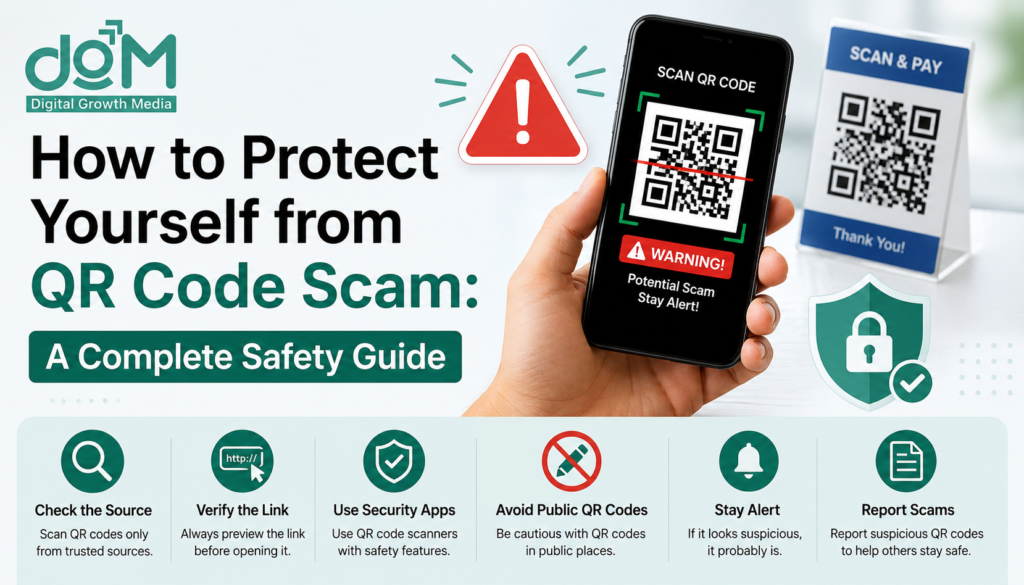
How to Protect Yourself from QR Code Scam
Following a few simple safety practices can significantly reduce your risk.
Verify the Source
Only scan QR codes from trusted businesses, official websites, or verified organizations.
Check the URL Before Opening
Many smartphones display the destination link before opening it. Read the URL carefully and make sure it belongs to the official website.
Never Share OTPs or Passwords
Legitimate businesses will never ask you to share your OTP, banking PIN, or passwords through a QR code.
Use Secure Payment Apps
Make payments only through trusted and updated banking or UPI applications.
Avoid Random QR Codes
Do not scan QR codes received from unknown WhatsApp messages, emails, or social media accounts.
Keep Your Device Updated
Regular software updates include important security patches that help protect your device against cyber threats.
Install Mobile Security Software
Reliable antivirus or mobile security apps can detect malicious websites and dangerous downloads.
What Should You Do If You Become a Victim?
If you believe you’ve fallen for a QR Code Scam, act immediately.
- Contact your bank and block suspicious transactions.
- Change passwords for affected accounts.
- Report the incident to your payment provider.
- Scan your device for malware.
- File a complaint with your local cybercrime reporting authority.
- Monitor your bank statements for unusual activity.
Quick action can help minimize financial losses.
Why QR Code Scams Are Increasing
The popularity of digital payments and contactless transactions has made QR codes more common than ever.
Scammers know that most people trust QR codes without thinking twice. Since QR codes don’t visibly display the website address, many users scan them without verifying the destination, making them an easy target.
As digital payments continue to grow, awareness is the best defense against a QR Code Scam.
Best Practices for Safe QR Code Usage
Remember these simple tips whenever you scan a QR code:
- Scan only from trusted sources.
- Verify the destination URL.
- Never enter sensitive information on unfamiliar websites.
- Avoid downloading unknown apps.
- Keep your phone updated.
- Stay cautious of unexpected QR codes shared online.
These small precautions can protect you from significant financial and personal losses.
Conclusion
QR codes have made payments and online access faster and more convenient, but they have also created new opportunities for cybercriminals. Understanding how a QR Code Scam works is the first step toward protecting yourself.
Before scanning any QR code, take a few seconds to verify its source and destination. A little caution can prevent identity theft, financial fraud, and data breaches.
As online scams continue to evolve, staying informed and practicing safe digital habits is the best way to keep yourself and your personal information secure.