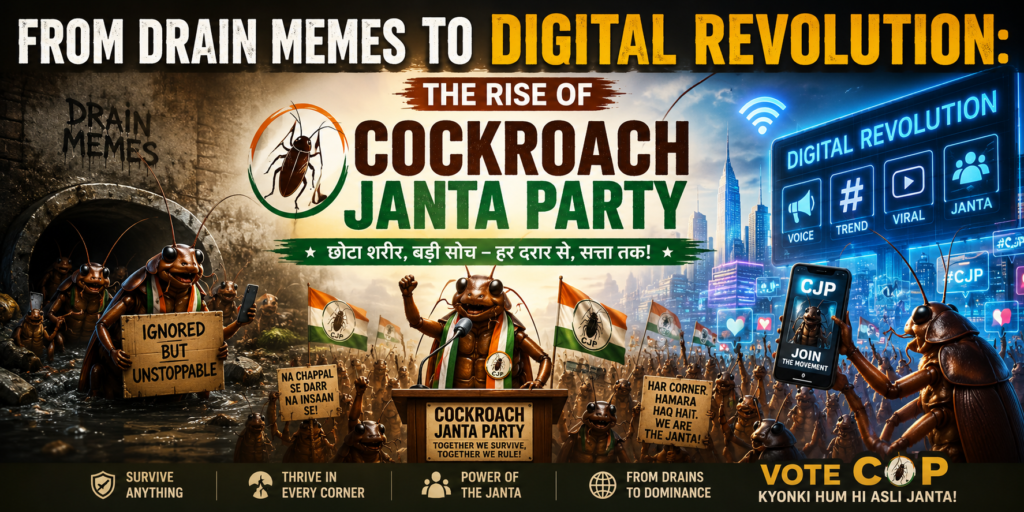
In today’s fast moving internet culture, the Rise of Cockroach Janta Party thing has kind of become one of the more unexpected viral movements in India. It started as this odd meme trend, with cockroach costumes and sarcastic political humor, and then somehow quickly turned into a full on nationwide social media moment. Videos showing young protesters dressed like cockroaches while cleaning Delhi’s polluted Yamuna River spread really fast on Instagram , X, and YouTube Shorts, and yeah they grabbed attention from millions.
What made it stand out was it mixed humor with activism in a way that felt pretty fresh. Instead of the usual kind of protest setup, with speeches and straight up political slogans, the Cockroach Janta Party leaned on satire, memes, and this really punchy visual storytelling. That combo helped it click with Gen Z audiences , who are constantly on short form content online, like basically always scrolling.
How the Cockroach Janta Party Began ?
The movement apparently started getting real traction after some heated remarks that compared angry young people and activists to “cockroaches.” But instead of flipping out in pure anger, a small bunch of young creators kind of decided to, you know, accept the insult and turn it into a kind of resistance banner.
Very soon, videos showed up online, with folks in cockroach costumes doing this odd thing like cleaning sections of the Yamuna River. The visuals were so offbeat that they caught attention immediately. At first it felt like a prank, but then it turned into a proper discussion, about pollution, joblessness, political exasperation, and youth activism in India.
The internet, as usual, leaned hard into the irony. Lots of people said the so-called “cockroaches” were helping more than a number of leaders who basically only talked online, and didn’t really do much else.
Why It Spread Like It Did ?
A big reason the Rise of Cockroach Janta Party took off was that it matched modern social media really well. These days, the algorithms tend to reward posts that are visually unusual, emotionally gripping, and easy for others to repost. This movement had all that, so it didn’t really stand a chance to stay small for long.
A person scrolling on Instagram could, like, instantly stop after seeing folks dressed as insects cleaning a polluted river. The visuals were funny and bizarre, but somehow also meaningful at the same time. That weird mix made a lot of users—millions of them—watch, share, comment, yeh, on those videos.
Short form content also really mattered. Reels and YouTube Shorts helped the whole trend move quicker than the traditional news coverage. In just a few days, meme pages, influencers, and creators across India were all talking about the movement, constantly.
The Power of Meme Culture
Meme culture has become one of the most solid ways of communication among young Indians. Instead of long arguments, or formal discussions, Gen Z often uses humor and satire to say things about politics, careers, relationships, and social problems.
The Cockroach Janta Party basically understood this internet dialect. By flipping an insult into a kind of symbol, the movement built a strong emotional bond with people online. The audience connected because the jokes showed, more or less, the real frustrations in society.
Memes, parody videos, and sarcastic edits started pouring onto social media. Before long, it was no longer only a simple protest. It turned into an online identity, something people wanted to join in on.
What the Movement says about Indian Youth ?
The popularity of the movement, it shows there’s a lot more frustration brewing in India’s younger lot. Like many students and even working professionals, they deal with joblessness worries, higher cost of living, those competitive exam cycles, and also this big, uncertainty hanging around the future.
Social media then sort of becomes a place, an outlet where these feelings get voiced through relatable content and viral trends, you know? The Cockroach Janta Party did well because it blended entertainment with emotions that a lot of young Indians already carried inside. Not necessarily said out loud, but felt.
And honestly, the movement also looked like a clear signal about how Gen Z talks differently compared to older generations. Instead of leaning on TV debates or those newspaper style arguments, younger people now use reels, memes, and internet communities to push messages and steer conversations.
Digital activism in the age of reels
The Rise of Cockroach Janta Party also makes it clear how digital activism is shifting in India. Before, protests often depended on physical gatherings, banners, and speeches. But now, a single viral video can trigger a wider national discussion in just a few hours, like it’s nothing.
Social media platforms have given regular people this power to shape public talk without needing backing from traditional media organizations. One hashtag, a meme page, even a viral reel can pull thousands of people together, almost instantly.
The Cockroach Janta Party got traction because it really encouraged participation. People made their own memes, reaction videos , and commentary posts too, so the whole thing kind of grew naturally online, without waiting for anyone to “authorize” it.
Why Marketers are even Looking At This Trend ?
Digital marketing experts are watching this movement pretty closely, mostly because it shows how viral storytelling can really work. It did well without those huge budgets, no costly promotions or advertising campaigns. What it leaned on instead was authenticity ,some humor, and honestly, the audience helping along as well.
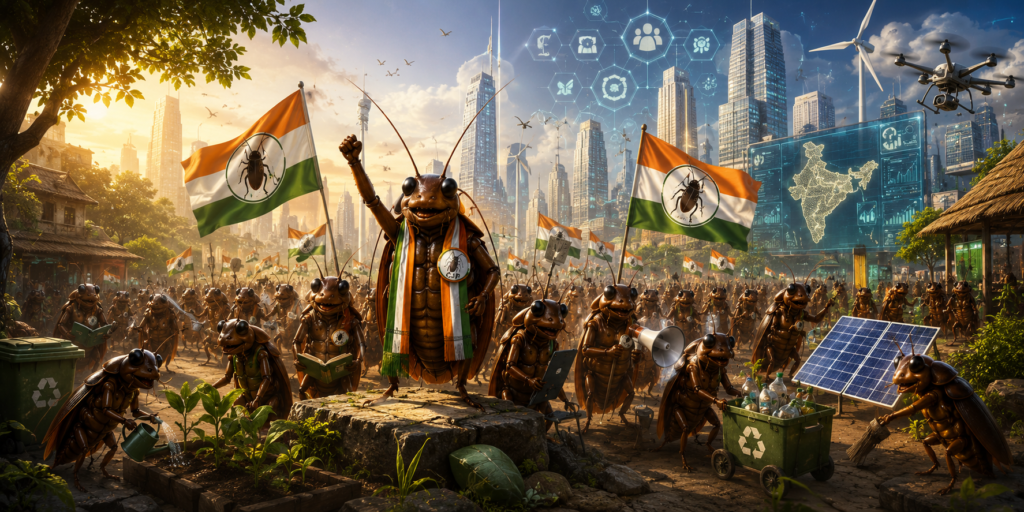
The branding was kind of unforgettable. The “Cockroach Janta Party” name felt, I mean, ridiculous and familiar at the same time, and that mix makes it easy to share instantly. When you add in solid visuals and those very relatable feelings, it turns into this clean example of internet-native branding that actually sticks.
Now a lot of marketers also treat the whole thing like proof that modern people often want raw, relatable content instead of polished corporate statements, like, all the time.
Criticism and debate stuff
Even with all the buzz, the movement still caught plenty of criticism. Some folks said that meme-based activism can end up turning serious issues into something more like entertainment. And since viral trends can vanish fast, there’s this real question about whether online efforts can lead to lasting change, or if it’s just a moment.
Others argue that even short-lived viral moments matter. They can bring awareness and spark discussion, even if it’s not permanent right away. So yeah, the Cockroach Janta Party might not “fix” everything it points to, but it already helped kick off conversations across millions of people.
Also Read More About: Can the BJP Hold Power in West Bengal Long-Term?
Conclusion
The Rise of Cockroach Janta Party represents a big shift in the way activism works in modern India, not just online, but also in how people feel heard. It kind of shows how humor, memes, and viral storytelling can turn into real muscle tools for sharing irritation, and basically nudging public talk in a direction people notice.
At first it felt like this strange internet joke, but then it grew into a kind of sign for youth expression in the digital age. From drain memes to this digital revolution vibe, the whole thing proved that social media is no longer only for fun and scrolling— it is also a space where cultural plus political conversations get shaped, in real time, like instantly.
Sure, the Cockroach Janta Party may have started with costumes and satire, but its effect points to something deeper about India’s internet generation. They seem creative, tightly connected, and ready to turn even the weirdest concepts into actions that can grab attention across the whole country.