India celebrates Independence Day on August 15 every year, remembering the historic moment in 1947 when British rule came to an end. But there is a fascinating question behind this date: Why was August 15 chosen as India’s Independence Day? And did India actually become independent nearly 10 months earlier than originally planned?
The answer takes us back to a dramatic period in Indian history when political tensions, Partition, communal violence and Britain’s decision to leave India changed the timeline of independence.
India Was Originally Expected to Gain Independence in 1948
Before August 15, 1947, the British government had planned to transfer power to Indian leaders by June 30, 1948. British Prime Minister Clement Attlee announced in February 1947 that Britain would leave India no later than that deadline.
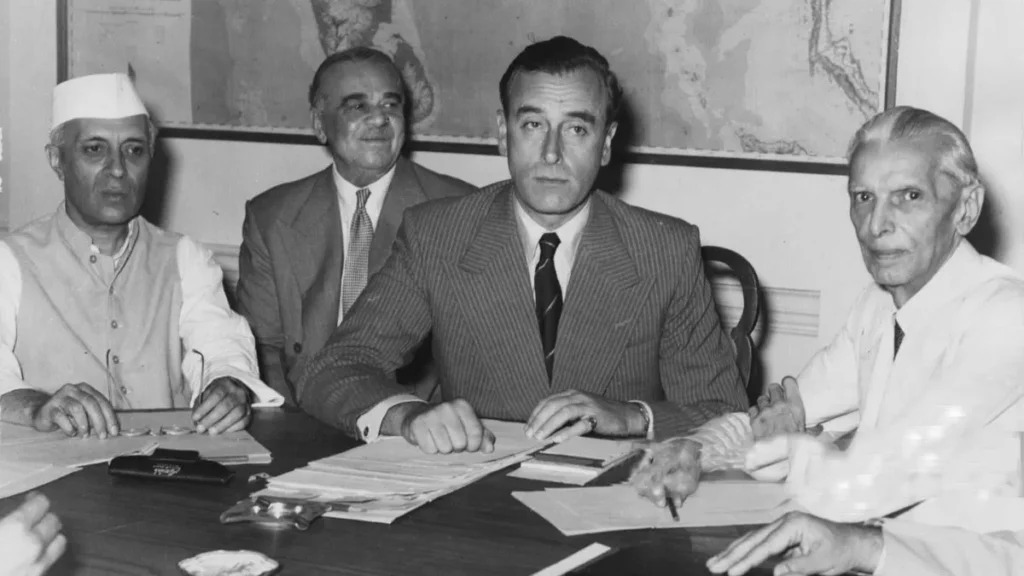
Lord Louis Mountbatten was appointed the last Viceroy of India and was given the responsibility of overseeing the transfer of power.
However, after arriving in India, Mountbatten quickly realised that the political and law-and-order situation was deteriorating. Tensions between the Congress and Muslim League had intensified, while communal violence was spreading in several parts of the country.
Instead of waiting until 1948, Mountbatten decided to bring the transfer of power forward to August 1947.
This meant that India became independent almost 10 months earlier than the original June 1948 deadline.
Why Did Mountbatten Move the Date Forward?
The decision was influenced by several factors.
The political situation was becoming increasingly unstable, and communal violence had created serious concerns about what might happen if the British remained for another year.
Mountbatten believed that a faster British withdrawal could prevent the situation from becoming even worse. However, the rushed process ultimately coincided with the Partition of India and one of the most violent and traumatic periods in the subcontinent’s history.
The Mountbatten Plan, announced on June 3, 1947, proposed the partition of British India and the creation of two dominions—India and Pakistan. The timeline was extremely short: the announcement came in June, while independence was scheduled for August.
So, Why August 15?
This is perhaps the most surprising part of the story.
Mountbatten later explained that the exact date of August 15, 1947, was not the result of a long-standing Indian demand. He selected it partly because August 15 was the second anniversary of Japan’s surrender in 1945.
As Supreme Allied Commander of the Southeast Asia Command during World War II, Mountbatten had a personal connection to the Japanese surrender. Japan’s Emperor Hirohito announced the country’s surrender on August 15, 1945.
Mountbatten therefore considered August 15 a significant date and chose it for the transfer of power in India.
In other words, the date that became one of the most important days in Indian history was influenced not only by India’s independence movement but also by an event from the final days of World War II.
January 26 Was Once India’s Independence Day
Another interesting fact is that January 26 had an important place in India’s independence movement long before August 15.
In 1929, the Indian National Congress under Jawaharlal Nehru adopted the goal of Purna Swaraj, or complete independence. January 26 was chosen as the day to observe India’s Independence Day, and the occasion continued to be marked from 1930 onward.
After India became independent, January 26 gained a different significance. On January 26, 1950, India’s Constitution came into effect and the country became a republic.
That is why January 26 is now celebrated as Republic Day, while August 15 remains Independence Day.
What Happened on August 15, 1947?
The Indian Independence Act 1947 formally ended British rule and created the two new dominions of India and Pakistan.
The legislation was introduced in the British House of Commons on July 4, 1947, and was passed within a remarkably short period. It established August 15 as the date on which British rule would end.
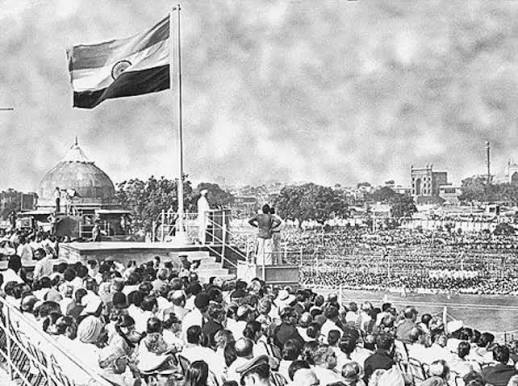
At midnight, India entered a new chapter.
Jawaharlal Nehru delivered his famous “Tryst with Destiny” speech as India prepared to become an independent nation. The moment represented the culmination of decades of political struggle, sacrifice and resistance against British colonial rule.
However, independence also came with Partition.
The creation of India and Pakistan resulted in mass migration, communal violence and enormous human suffering. Millions of people were forced to leave their homes as the borders of the new countries were established.
Why Does Pakistan Celebrate Independence Day on August 14?
There is another historical curiosity surrounding the date.
The original Indian Independence Act specified August 15, 1947, as the date of independence for both India and Pakistan. Pakistan later began observing August 14 as its Independence Day.
One explanation is that the formal transfer ceremony in Karachi took place on August 14, while Mountbatten then travelled to Delhi for the Indian ceremony. Another explanation relates to the Islamic calendar and the religious significance of August 14, 1947.
Thus, the dates celebrated by the two countries today have a more complicated history than they may initially appear.
Independence Came Early—but at a Huge Cost
The decision to advance India’s independence by around 10 months remains an important and debated part of history.
Mountbatten argued that a rapid transfer of power was necessary because of the worsening situation. Yet the hurried process did not prevent violence. Instead, Partition in 1947 brought enormous suffering to millions.
The speed of the transition also meant that many crucial decisions had to be made in an extremely short period. The boundaries between India and Pakistan were announced only after independence, adding further uncertainty during an already chaotic period.
The Real Meaning of August 15
Today, August 15 Independence Day is much more than a date selected by a British Viceroy.
It represents the end of British colonial rule and the beginning of India’s journey as an independent nation. From the freedom movement and the sacrifices of countless Indians to the midnight celebrations of 1947, the date carries deep historical significance.
The fact that independence came earlier than originally planned makes the story even more remarkable. Britain had expected to remain until 1948, but the rapidly changing political situation resulted in freedom arriving in August 1947.
And the reason behind the date is perhaps the biggest surprise: August 15 was chosen partly because it marked the second anniversary of Japan’s surrender in World War II.
Conclusion
The story of why India celebrates Independence Day on August 15 is a fascinating combination of political urgency, World War II history and India’s long struggle for freedom.
India was originally expected to receive the transfer of power by June 1948, but Lord Mountbatten brought the date forward to August 1947. He ultimately selected August 15, 1947, partly because it was the second anniversary of Japan’s surrender.
More than seven decades later, August 15 remains one of the most important dates on India’s calendar—a reminder of independence, sacrifice, Partition and the nation’s journey toward becoming a modern republic.