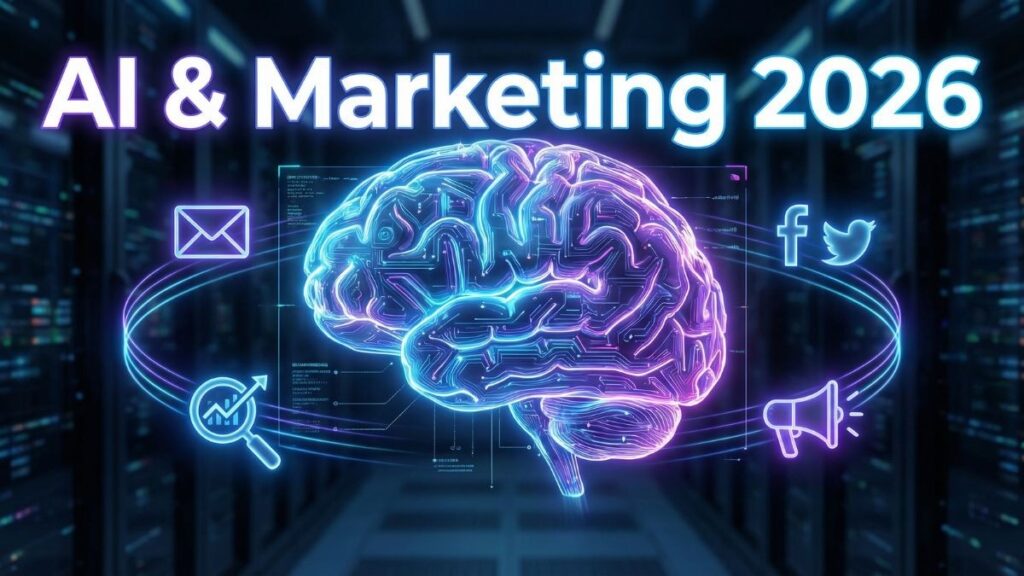
Marketing is changing quickly, and AI tools for marketing are now becoming a practical part of everyday business. From creating content and finding keywords to analyzing customers and improving ad campaigns, artificial intelligence can help marketers save time and make better decisions.
However, AI is not about replacing human creativity. Instead, the best results come when marketers combine AI marketing tools with human ideas, experience, and strategy.
In 2026, businesses of all sizes can use AI to improve productivity, personalize campaigns, understand audiences, and build stronger digital marketing strategies. Let’s look at how you can use AI effectively.
1. Use AI for Content Creation
Creating fresh content regularly can take a lot of time. AI writing tools can help marketers generate blog ideas, social media captions, email drafts, product descriptions, and content outlines.
For example, marketers can use AI to find content topics around their main keywords and create an initial draft. After that, human editing is important to add expertise, facts, brand voice, and originality.
The best approach is simple: use AI for content assistance, not content replacement.
2. Improve Keyword Research With AI
Keyword research remains important for SEO, but AI can make the process faster. AI SEO tools can identify related keywords, search intent, topic clusters, questions, and content opportunities.
Instead of targeting only one keyword, marketers can build content around a complete topic.
For example, if your main keyword is AI tools for marketing, related topics could include:
- AI tools for SEO
- AI content marketing tools
- AI social media tools
- AI marketing automation
- AI tools for small businesses
- AI-powered digital marketing
As a result, your website can create more useful and comprehensive content.
3. Create Better Social Media Content
Social media marketers have to constantly produce fresh ideas. AI can help generate captions, post ideas, content calendars, hashtags, and creative concepts.
You can also use AI to adapt one piece of content for different platforms. A blog can become a LinkedIn post, Instagram caption, Facebook post, or short video script.
However, avoid publishing generic AI-generated content without reviewing it. A human touch makes social media posts more natural, relatable, and engaging.
4. Personalize Marketing Campaigns
Customers expect relevant communication. AI can analyze customer behavior and help businesses create more personalized marketing campaigns.
For example, an ecommerce brand can recommend products based on previous browsing or buying behavior. Similarly, email marketers can create different messages for new visitors, existing customers, and inactive users.
This makes AI-powered personalization one of the most useful applications of AI in digital marketing.
5. Use AI for Email Marketing
AI can support almost every stage of an email campaign. Marketers can use it to generate subject lines, write email drafts, segment audiences, and suggest personalized messages.
AI can also help identify which type of content may work better for different customer groups.
Still, marketers should review every email before sending it. Brand tone, accuracy, and customer trust should always come first.
6. Make Paid Advertising Smarter
Paid advertising can become expensive when campaigns are not properly optimized. AI can help marketers analyze campaign data, identify trends, test different messaging, and improve audience targeting.
Platforms such as Google and Meta already use machine learning to support automated bidding, audience targeting, and campaign optimization.
Therefore, marketers should focus less on manually controlling every small setting and more on providing strong creative assets, accurate data, and clear campaign goals.
Read More-8-Layer GMB Citation Strategy: How It Can Strengthen Local Visibility
7. Use AI for Customer Insights
Understanding customers is at the heart of successful marketing. AI can process large amounts of data and identify patterns that may be difficult to notice manually.
Marketers can use AI to analyze:
- Customer feedback
- Reviews
- Website behavior
- Search trends
- Purchase patterns
- Social media conversations
- Campaign performance
These insights can help businesses understand what customers want and where marketing strategies can improve.
8. Automate Repetitive Marketing Tasks
One of the biggest benefits of AI marketing automation is saving time.
Routine tasks such as reporting, data organization, customer segmentation, content repurposing, and basic chatbot responses can be automated.
This allows marketing teams to spend more time on strategy, creativity, research, and customer relationships.
The goal should not be to automate everything. Instead, automate repetitive work while keeping important decisions under human control.
9. Improve Customer Support With AI
AI chatbots and virtual assistants can answer common customer questions at any time. They can provide information about products, services, pricing, availability, and basic processes.
For businesses, this can improve response times and reduce pressure on customer support teams.
However, complex or sensitive questions should still be transferred to human representatives. A combination of AI and human support usually provides a better customer experience.
10. Use AI Analytics to Measure Results
Marketing without measurement can become guesswork. AI-powered analytics can help marketers identify patterns in traffic, conversions, engagement, and customer behavior.
Instead of simply looking at numbers, marketers can ask AI questions such as:
- Which campaign generated the most conversions?
- Which pages have high traffic but low engagement?
- Which audience segment performs best?
- Where are customers dropping off?
- What content should we improve?
This makes data easier to understand and can support faster decision-making.
11. Combine AI With Human Creativity
Although AI in digital marketing is powerful, it should not completely replace marketers.
AI can analyze information quickly, generate ideas, automate tasks, and identify patterns. Humans bring creativity, emotions, strategic thinking, personal experience, and brand understanding.
Therefore, the strongest marketing strategy in 2026 is AI + human creativity.
Use AI to save time and improve efficiency, but let people make the final decisions.
12. Focus on Quality, Trust, and Originality
As AI-generated content becomes more common, quality will become even more important.
Businesses should avoid producing large amounts of low-value content simply because AI makes it easy. Instead, focus on original ideas, useful information, real experience, expert opinions, and content that genuinely helps customers.
A successful AI marketing strategy should always follow three principles: create value, maintain accuracy, and build trust.
Final Thoughts
AI is no longer just a futuristic technology. In 2026, AI tools for marketing can help businesses work faster, understand customers better, create stronger campaigns, and improve marketing performance.
The key is to use AI strategically. Start with repetitive tasks, content research, analytics, personalization, and campaign optimization. Then gradually expand AI into other areas of your marketing workflow.
Most importantly, remember that technology works best when combined with human creativity. Businesses that learn to use AI marketing tools responsibly and effectively can build smarter, faster, and more customer-focused marketing strategies.
FAQs
1. What are the best AI tools for marketing in 2026?
The best tools depend on your marketing needs. AI platforms for content creation, SEO, analytics, social media, email marketing, advertising, and automation can all be useful.
2. How is AI used in digital marketing?
AI is used for content creation, keyword research, personalization, customer analysis, advertising optimization, chatbots, automation, and marketing analytics.
3. Can AI replace digital marketers?
AI can automate many repetitive tasks, but it cannot fully replace human creativity, strategy, emotional understanding, and decision-making.
4. Is AI-generated content good for SEO?
AI can help create useful content, but quality and originality matter. Content should provide genuine value, demonstrate expertise, and satisfy the user’s search intent.
5. How can small businesses use AI for marketing?
Small businesses can start with affordable AI tools for social media ideas, content research, email marketing, customer support, SEO, and data analysis.
6. What is the future of AI in marketing?
AI marketing is likely to become more personalized, automated, predictive, and integrated into everyday marketing workflows. Human oversight will remain important for quality and trust.