AI has introduced a variety of new ways to optimize workflows, develop and track marketing content and strategies, and even change the way a company conducts market research. The most useful AI tools for marketers in 2026 improve the productivity of users by reducing time spent on administrative tasks and freeing up time to use the judgment and creativity inherent in the human mind to develop a marketing strategy.
Marketing tools have proliferated so much that nearly every stage of marketing can now be automated by some combination of AI and other technologies. AI tools can create content, improve search engine ranking, manage social media, and market products automatically. While many marketing solutions exist, selecting the right tools requires careful analysis of marketing needs, constraints, and budgets.
In the next section, we’ll analyze 15 of the top marketing AI solutions available today.
Why Are AI Marketing Tools Important in 2026?
Marketing has evolved into a multitude of integrated processes and tools. Some examples of this are audience analysis, content generation, and advertising. Other activities include marketing campaigns to generate leads, performance tracking, and the manual execution of many of these processes.
Some of these AI-driven marketing assistants can do automated research and content generation, data pattern analysis for campaigns, and a host of other marketing tasks.For example, a business can leverage an AI assistant to create a blog outline, a graphic design tool to create social media content, and an analytics platform to analyze website traffic. With these integrated tools, a small team can manage multiple marketing activities with much less effort.
In their AI Marketing Tools Guide, HubSpot breaks down the various applications of AI, from content creation to marketing analytics and customer engagement.
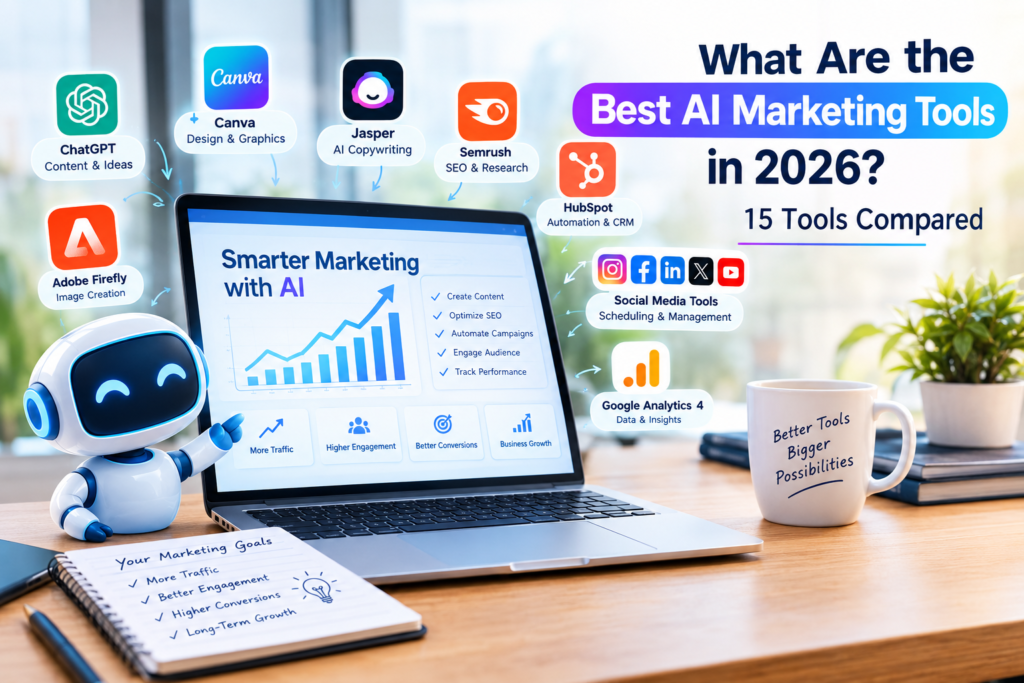
15 Best AI Marketing Tools Compared
1. ChatGPT: Best for Marketing Ideas and Content
ChatGPT helps marketers brainstorm campaign ideas, create content outlines, draft social media posts, develop email copy, and organize research. It can also help analyze supplied information and generate variations of advertising messages.
Best for: Content planning, brainstorming, and general marketing assistance.
Practical tip: Provide your audience, campaign objective, preferred tone, and relevant product information to receive more useful drafts. Always verify factual claims before publishing.
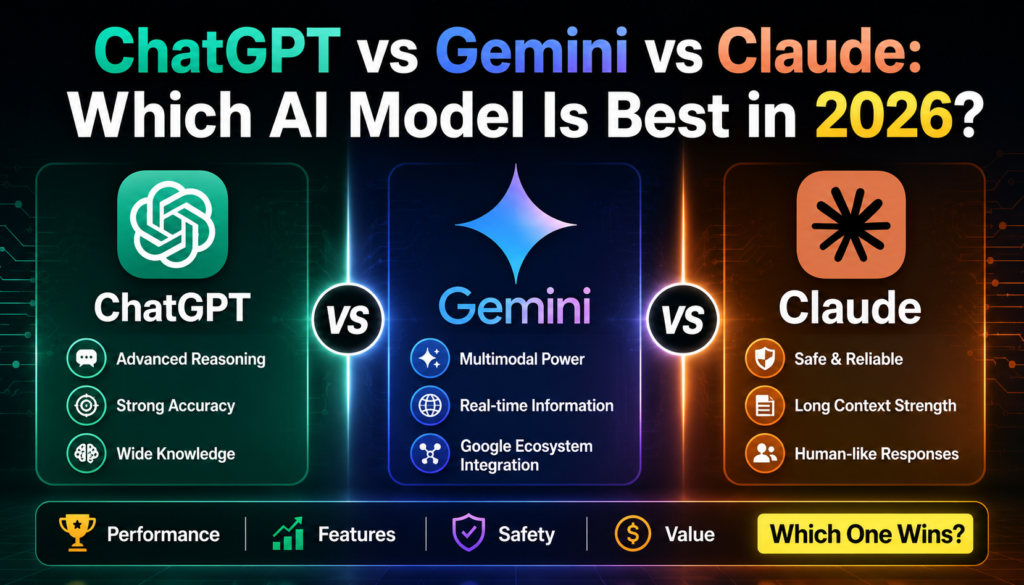
Also Read-ChatGPT vs Google: Which One Should You Use in 2026?
2. Claude: Best for Long-Form Content
Claude can assist with writing, editing, research synthesis, and organizing information from lengthy documents. Marketing teams can use it to develop article outlines, refine messaging, and review campaign materials.
Best for: Long-form writing, document analysis, and content refinement.
3. Jasper: Best for Brand-Consistent Marketing Copy
Jasper focuses on marketing content and workflows. It can help teams create advertising copy, campaign messages, product descriptions, and other materials while maintaining established brand guidelines.
Best for: Marketing departments producing content across multiple channels.
4. Canva: Best for Marketing Graphics
Canva combines design templates with AI-assisted creative features. Marketers can use it to prepare social media graphics, presentations, promotional banners, and campaign visuals without advanced design skills.
Best for: Small businesses, social media teams, and visual content production.
5. Adobe Firefly: Best for AI-Assisted Visual Creation
Adobe Firefly supports AI-assisted image generation and editing. It can help marketing teams develop visual concepts, adapt creative assets, and prepare images for different campaign requirements.
Best for: Creative teams that need greater flexibility when developing visual assets.
6. Semrush: Best for SEO Research
Semrush provides SEO research and competitive analysis capabilities, including keyword research, backlink analysis, and website auditing. Its AI-related features can also help marketers assess search visibility.
Best for: SEO professionals, agencies, and businesses investing in organic search.
7. Surfer SEO: Best for Content Optimization
Surfer SEO helps content teams evaluate pages against relevant search results and identify opportunities to improve topical coverage and on-page optimization.
Best for: Content marketers who want a more structured SEO writing process.
Remember that content optimization scores are guidance, not guarantees of higher rankings.
8. Grammarly: Best for Editing Marketing Content
Grammarly assists with grammar, clarity, tone, and writing improvements. Marketing teams can use it to polish website copy, emails, advertisements, and professional communications.
Best for: Teams that publish frequent written content.
9. HubSpot: Best for Marketing Automation
HubSpot combines CRM capabilities with marketing tools for managing contacts, campaigns, lead nurturing, and customer communications. Its AI features support various marketing and sales workflows.
Best for: Businesses that need customer relationship management alongside marketing automation.
10. Mailchimp: Best for Email Campaigns
Mailchimp supports email marketing, audience management, campaign creation, and automated customer communications. Depending on the plan and available features, AI assistance can help with content and campaign preparation.
Best for: Small businesses, online stores, and email marketing teams.
11. Buffer: Best for Social Media Scheduling
Buffer helps businesses plan and schedule social media content across supported platforms. Its content assistance features can support caption development and repurposing ideas.
Best for: Freelancers, small businesses, and lean social media teams.
12. Hootsuite: Best for Social Media Management
Hootsuite provides tools for managing social accounts, scheduling content, monitoring conversations, and reviewing performance. AI-assisted features can support social media content workflows.
Best for: Marketing teams managing multiple social media accounts.
13. Zapier: Best for Connecting Marketing Workflows
Zapier connects supported applications through automated workflows. For example, a business could send new form submissions to a CRM, notify its sales team, and organize lead information without manually transferring data between systems.
Best for: Businesses that want to reduce repetitive administrative work.
14. Descript: Best for Video Content
Descript supports transcript-based audio and video editing. It can help marketers edit recordings, prepare video content, and repurpose longer material into shorter assets.
Best for: Video marketers, podcast creators, and businesses producing educational content.
15. Google Analytics 4: Best for Measuring Marketing Performance
Google Analytics 4 helps businesses understand website and app activity, including traffic sources, engagement, and conversions. Its reporting and insights can support decisions about which marketing channels deserve further attention.
Best for: Businesses measuring website performance and campaign outcomes.
How to Choose the Right AI Marketing Tools
Selecting software based on popularity alone can lead to unnecessary expenses. Instead, start by identifying your biggest marketing challenge.
Consider these practical guidelines:
- For content creation: Start with ChatGPT or Claude and add a specialist writing tool if your workflow requires it.
- For SEO: Evaluate Semrush or Surfer SEO based on your research and optimization requirements.
- For visual content: Consider Canva for everyday marketing graphics or Adobe Firefly for AI-assisted image creation.
- For automation: Compare HubSpot and Mailchimp for customer communications, or Zapier for connecting different applications.
- For social media: Evaluate Buffer or Hootsuite according to your publishing and monitoring needs.
- For reporting: Use Google Analytics 4 to assess website engagement and conversions.
Before subscribing, review feature limitations, pricing, integrations, data-handling policies, and the time required to learn each platform.
Best AI Marketing Tools for Small Businesses
The best AI marketing tools for small businesses are not necessarily the most expensive or feature-rich options. They are the tools that address immediate needs without creating unnecessary complexity.
A practical starting setup could include ChatGPT for content assistance, Canva for graphics, Google Analytics 4 for performance measurement, and Buffer for social media scheduling.
Businesses focused on organic search can add an SEO research platform when keyword analysis, competitor research, or technical auditing becomes a priority.
It is also worth reviewing existing software before purchasing new subscriptions. Many marketing platforms already include AI-assisted features, so an additional tool may not be necessary.
Best Practices for Using AI in Marketing
AI-generated content should be treated as a starting point rather than a finished product. Review every important claim, add relevant examples, and make sure the final material reflects your business’s expertise.
Avoid publishing large volumes of generic content simply because production has become easier. Useful marketing content should answer genuine customer questions and offer information readers can apply.
Protect customer information when using third-party AI platforms, and check the terms governing how supplied data may be processed. For advertising, email marketing, and automated customer interactions, maintain appropriate human oversight.
Finally, measure results using meaningful indicators such as qualified leads, conversion rates, engagement, and customer acquisition costs. The goal is not to use more AI tools; it is to improve marketing performance.
Conclusion
The best AI marketing tools in 2026 depend on the work you need to accomplish. ChatGPT and Claude can assist with content, Semrush supports SEO research, Canva helps create graphics, HubSpot manages customer-focused marketing workflows, and Zapier connects applications.
Start with one or two tools that address your most time-consuming tasks. Test their output, measure the results, and expand your toolkit only when there is a clear business need.
If you want to improve your online visibility and develop a more structured marketing strategy, consider reviewing the services offered by Digital Growth Media to identify areas where professional support may complement your existing tools.