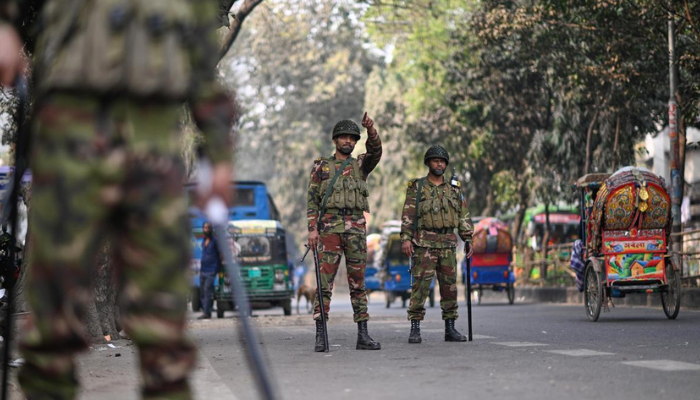
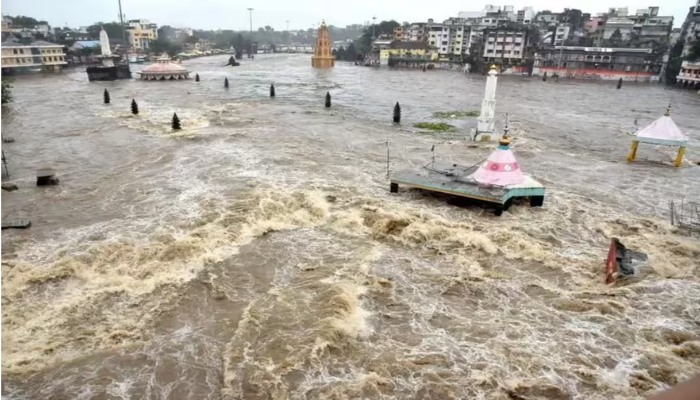
The Nashik District Floods have intensified after the Godavari River crossed the danger mark following continuous heavy rainfall across Maharashtra. Rising water levels have affected several low-lying areas, prompting local authorities to launch emergency rescue operations. More than 210 residents have already been shifted to safer locations as officials continue to monitor the situation around the clock.
The India Meteorological Department (IMD) has also issued fresh rainfall warnings for Nashik and nearby districts. As a result, disaster response teams remain on high alert to prevent any loss of life or property.
Godavari River Water Level Continues to Rise
Persistent rainfall in Nashik and upstream regions has significantly increased the water level of the Godavari River. Consequently, officials declared that the river has crossed the danger mark, raising concerns about flooding in nearby villages and urban settlements.
Moreover, overflowing streams and drainage channels have added to the challenges faced by residents. Waterlogging has disrupted normal life, while several roads remain partially submerged.
Authorities have advised people living close to riverbanks to move to designated relief centres until the situation improves.
Over 210 Residents Evacuated Safely
One of the most encouraging developments during the Nashik District Floods has been the swift evacuation carried out by emergency teams.
Officials confirmed that over 210 people from vulnerable locations have been safely relocated. Rescue teams, along with local volunteers, worked continuously despite difficult weather conditions to ensure that families, elderly citizens, and children reached secure shelters.
Additionally, temporary relief camps have been equipped with:
- Safe drinking water
- Food supplies
- Medical assistance
- Essential medicines
- Emergency accommodation
These proactive measures have significantly reduced the immediate risk to affected communities.
Administration Remains on High Alert
District authorities are closely monitoring rainfall patterns and river water levels. Meanwhile, disaster management officials are coordinating with police, health departments, and rescue agencies to respond quickly if conditions worsen.
Furthermore, control rooms have been activated to receive emergency calls and provide assistance to residents.
Officials continue to appeal to citizens to:
- Avoid unnecessary travel.
- Stay away from flooded roads and riverbanks.
- Follow official advisories.
- Keep emergency contact numbers accessible.
- Shift valuables to higher places if living in flood-prone areas.
Such precautions can greatly improve public safety during heavy rainfall.
Heavy Rainfall Disrupts Daily Life
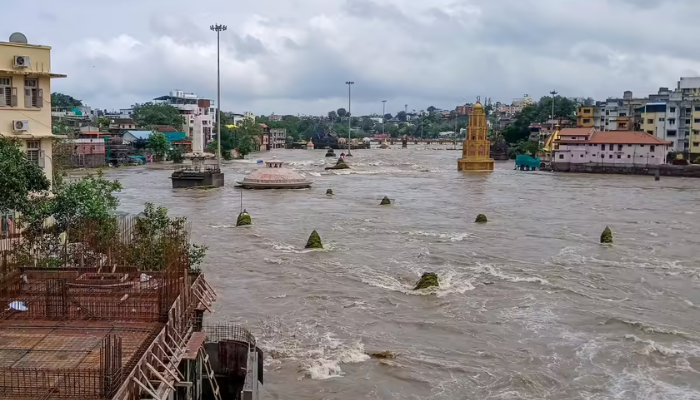
Continuous showers have affected transportation across parts of Nashik district. Several roads are experiencing waterlogging, leading to slower traffic movement and temporary diversions.
Meanwhile, schools in vulnerable areas are monitoring the weather before making decisions regarding classes. Farmers are also keeping a close watch on their crops, as excessive rainfall may impact agricultural production if the downpour continues.
However, local authorities remain optimistic that coordinated planning and timely action will minimise long-term damage.
Rescue Teams Continue Monitoring Flood Situation
The National Disaster Response Force (NDRF), State Disaster Response Force (SDRF), fire services, police personnel, and local administration remain prepared for additional rescue operations if required.
Moreover, boats and emergency equipment have been deployed in sensitive areas to ensure rapid response.
Medical teams are also on standby to prevent the spread of waterborne diseases, which often increase after prolonged flooding.
Weather Forecast for Nashik
According to weather officials, moderate to heavy rainfall may continue over the next few days across Nashik district and surrounding regions.
As a result, residents should stay informed through official weather updates and avoid believing unverified social media rumours.
Although rainfall is expected to fluctuate, authorities are continuously reviewing river levels and taking preventive action wherever necessary.
Public Cooperation Is Essential
The ongoing Nashik District Floods highlight the importance of community awareness and timely disaster preparedness.
Citizens can support rescue efforts by:
- Cooperating with evacuation teams.
- Reporting emergencies immediately.
- Avoiding flooded bridges and underpasses.
- Helping elderly neighbours when safe.
- Following verified government advisories.
Working together can help reduce risks and protect lives during extreme weather events.
Latest Situation
As of now, flood response teams remain deployed across Nashik district while the Godavari River continues to be closely monitored. The evacuation of vulnerable residents has been completed successfully in several locations, and relief measures are ongoing.
If rainfall decreases in the coming days, water levels may gradually stabilise. Until then, authorities urge everyone to remain cautious and prioritise safety above all else.
Frequently Asked Questions (FAQs)
1. Why are the Nashik District Floods becoming severe?
Heavy and continuous monsoon rainfall has caused the Godavari River to cross the danger mark, leading to flooding in low-lying areas.
2. How many people have been evacuated?
More than 210 residents have been safely shifted to relief shelters by rescue teams.
3. Which river is causing concern in Nashik?
The Godavari River has crossed the danger mark following heavy rainfall.
4. Are rescue operations still ongoing?
Yes. Authorities and disaster response teams remain on standby and continue monitoring vulnerable areas.
5. What should residents do during flood alerts?
Residents should follow official advisories, avoid flooded roads, prepare emergency supplies, and cooperate with evacuation authorities.