
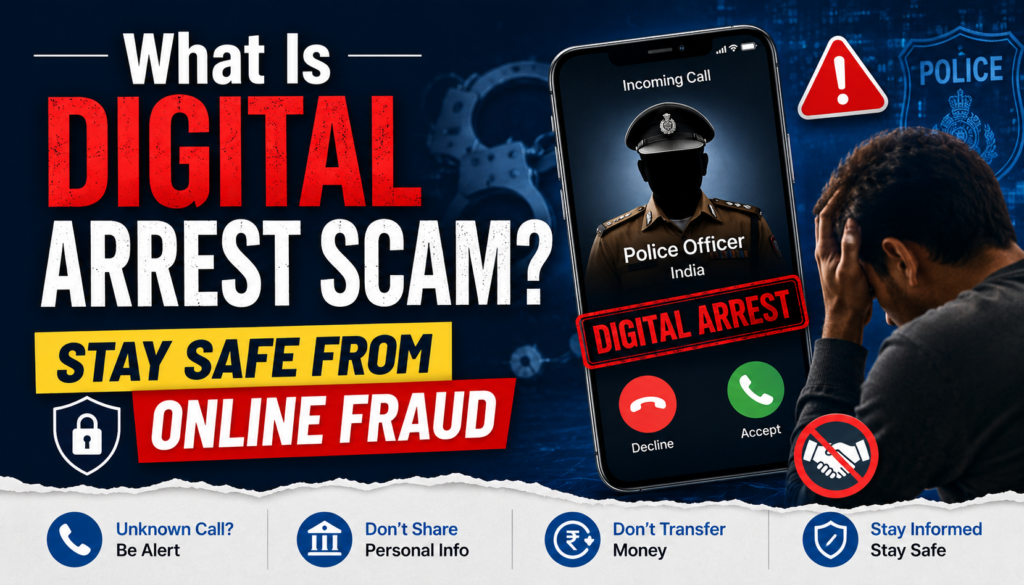
So like, the upshot of digital technology is that it has made our lives easier in many ways, but at the same time it also opened doors for cybercriminals, sort of unasked. In India, one of the newer online scams going around is the “Digital Arrest Scam”. Loads of people have got fake calls, where the scammers act like police people, CBI officials, customs officers, or some other government authorities.
They basically lean on fear and heavy pressure, to make the person believe they are tied to a serious offense. Then the threats come in, arrest talk, legal action, or even account freezing unless the victim does exactly what they say, and sends money right away.
If you can understand how this Digital Arrest Scam actually works, it becomes easier to spot the warning signals and not end up being the next victim.
What Is a Digital Arrest Scam?
A Digital Arrest Scam is a kind of cyber fraud where scammers falsely tell someone that they are connected to illegal things like money laundering, drug trafficking, tax evasion, or cybercrime in general.
Usually the fraudsters reach out to victims via phone calls, WhatsApp, or video calls, but they act like they actually belong to a government setup, for example like the Police Department, Central Bureau of Investigation (CBI), Enforcement Directorate (ED), Customs Department, Telecom Regulatory Authority, or Income Tax Department.
Then they try to intimidate the victim by saying that an FIR has already been registered or that an arrest warrant has been issued, but the truth is, these statements are totally made up. In fact, none of it is real.
How Does a Digital Arrest Scam Work?
A Digital Arrest Scam usually runs through a carefully thought out set up, meant to trigger panic, fast, and without much thinking. It goes kind of like this and yes, it can feel very real in the moment.
Step 1: Fake Phone Call
It often starts with a phone call from someone saying they are a government official. Sometimes, they even manage to show caller IDs that look believable, like its really from the right office, and then you, you end up trusting it too quickly.
Step 2: False Accusations
Then they tell the person that their Aadhaar number, mobile number, bank account, or even their SIM card has been tied to criminal doings. It’s said in a serious, official tone, and the goal is fear.
Step 3: Video Call Verification
To make everything seem authentic, the fraudsters might ask you to join a video call. In the background, people dressed as police officers or government representatives may appear, so the whole scene feels like “proof” even though it isn’t.
Step 4: Psychological Pressure
After that, they push hard mentally. They insist you should not share anything with anyone, and they create urgency by claiming that immediate action is needed, otherwise you’ll be arrested.
Step 5: Demand for Money
At the end they ask for money for “verification,” “security clearance,” “bail,” or something like a “case settlement,” all phrased like it’s the only solution.
Once you send the payment, the scammers vanish, and you’re left dealing with the mess alone.
Common Warning Signs of a Digital Arrest Scam
Spotting the warning signs is honestly one of the easiest ways to keep yourself safe.
Try to watch for these red flags, like really pay attention:
- Unexpected calls showing up from numbers you don’t recognize.
- Threats that claim you will be arrested right away.
- Requests for you to stay on a nonstop video call.
- Pressure to keep the whole chat secret.
- Demands for bank information or OTP codes.
- Requests to move money immediately.
- Fake government paperwork sent over WhatsApp or via email.
- Messages that have awkward grammar, or communication that feels shady.
If any of the above happens to you, there is a pretty high chance it’s a Digital Arrest Scam going on.
Why Are These Scams Increasing?
Cybercriminals know that most people sort of respect law enforcement agencies ,and they also fear legal action a bit more than they should.
So instead of hacking systems, scammers now lean on social engineering, which is basically a method that tweaks human feelings like fright ,panic, and urgency.
And because personal information is easy to find thanks to data leaks, plus the stuff people share on social media, scammers can craft their narratives in a way that feels believable.
How to Protect Yourself From a Digital Arrest Scam?
The good news is that you can protect yourself by following a few small precautions , even if it feels a bit stressful.
Stay Calm
If somebody threatens you with arrest over the phone, don’t panic. Real law enforcement agencies typically don’t ask people to move money over calls.
Verify the Caller
Always confirm who the person is , using official government websites or by reaching out to the relevant department directly. Don’t rely on what they claim in the moment.
Never Share Personal Information
Please don’t share Aadhaar number , PAN details , bank account information , debit or credit card details , OTPs , or passwords.
Government officials will not request such data in a phone conversation.
Don’t Transfer Money
No legitimate authority asks citizens to send money via UPI, bank transfer, gift cards, or cryptocurrency, to “avoid arrest” or to “resolve” anything quickly.
Talk to Family Members
Scammers often insist you stay silent and not speak to anyone. Make sure you talk it over with your family, or a trusted friend, before you do any step.
Report Suspicious Calls
If you get a suspicious call, report it right away to your local cybercrime authorities or via the National Cyber Crime Reporting Portal.
What Should You Do If You Become a Victim?
If you already shared information, or transferred money in a Digital Arrest Scam, act right away, like now.
- Try contacting your bank and freeze your account if it seems necessary.
- Then change your passwords, immediately.
- Also block your debit cards and credit cards, no waiting.
- Report the fraud to your closest cybercrime police station.
- File a complaint through the National Cyber Crime Reporting Portal.
- Keep proof saved, like screenshots, call recordings, and transaction details, as evidence.
Taking fast action can raise the odds of recovering your money.
Government Advisory on Digital Arrest Scams
Government agencies have, again and again, warned citizens about these kind of scams, and honestly it’s not just one or two incidents.
A few things to keep in mind , and try to not forget.
- Police never do arrests via video call , it’s basically never how it works.
- Government officers also do not request money over the phone calls, no matter what story they say.
- Real investigations follow the proper legal steps, with correct paperwork and procedures.
- If someone tells you to pay right away, consider that suspicious, and don’t assume it’s normal.
Knowing these cues can help you avoid money losses, which is the whole point really.
Best Practices to Stay Safe Online
Developing solid digital routines can, in a way, cut down the chance of becoming a target.
- Keep your mobile number private as much as possible.
- Try not to post personal information on social media.
- Turn on two factor authentication (2FA) for important accounts.
- Use passwords that are both strong and unique.
- Keep your phone and your apps updated.
- Stay aware of newer cyber scams, as they shift all the time.
Cybersecurity awareness is your best line of defense, really.
Conclusion
A Digital Arrest Scam is made to take advantage of fear, and push you into making quick choices, kinda fast without thinking. The scammers can come off as believable ,they may use fake identities and sometimes they even craft legal papers that look really official, but the point is still the same— they want your money, or your personal details.
Keep in mind that any legitimate government agency will never ask you to move funds, share your bank information, or join some arrest situation over a video call. So if you get one of those calls, don’t panic, stay as steady as you can, then check everything through official channels. After that, report the incident right away.
Being alert is the best shield against a Digital Arrest Scam. When you keep learning about it , and also share what you know with your family and friends, you lower the chances